





Chevrolet Catalytic Converter Replacement
Chevrolet Catalytic Converter Replacement
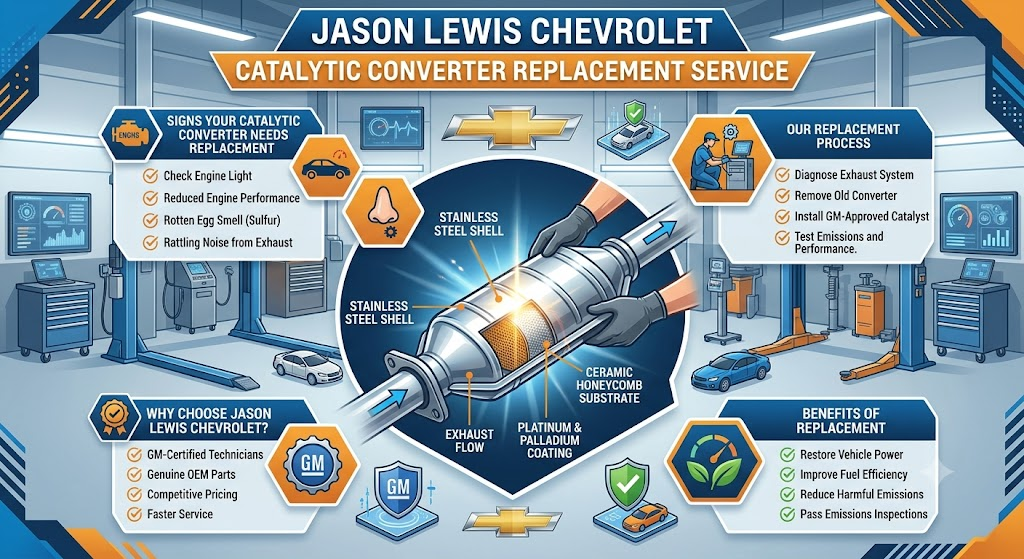
Catalytic Converter Replacement
for residents in Livingston, Cookeville, Hilham, Rickman, Allons, Alpine, Byrdstown, and Algood, TN
The catalytic converter is an important part of your Chevrolet's emissions-control system. Its job is to use chemical reactions to convert certain harmful pollutants in engine exhaust into less harmful substances before they are released through the tailpipe.
Your Chevrolet's engine produces exhaust gases whenever it burns fuel. Before those gases leave the vehicle through the exhaust system, they pass through the catalytic converter.
When a catalytic converter is damaged, clogged, contaminated or no longer working efficiently, replacement may be necessary to restore proper emissions control and help your Chevrolet operate as designed.
At Jason Lewis Chevrolet, our factory-trained technicians can diagnose catalytic converter and emissions-system problems and determine whether the converter actually needs to be replaced.
What Is a Catalytic Converter?
A catalytic converter is an emissions-control device located in your Chevrolet's exhaust system, generally between the engine and the muffler.
Inside the converter is a structure containing catalyst materials that promote chemical reactions as hot exhaust gases pass through it. These reactions help reduce pollutants produced during combustion.
In simple terms, the catalytic converter helps clean up the exhaust before it leaves your vehicle.
Catalytic converters have been used on most passenger cars and light-duty trucks since the 1970s and are an important part of modern vehicle emissions control.
Why Does a Chevrolet Need a Catalytic Converter?
Your engine needs to burn fuel to produce the power that moves your vehicle. That combustion process naturally produces exhaust gases containing pollutants.
The catalytic converter is designed to reduce some of those pollutants before they reach the atmosphere.
It is therefore an important part of your Chevrolet's emissions system—not simply another section of the exhaust pipe.
The converter works together with other components, including oxygen sensors, the engine computer, and fuel-control systems. When all of these components are functioning properly, the emissions system can operate as intended.
What Does a Catalytic Converter Do?
The catalytic converter promotes chemical reactions that transform certain pollutants in the exhaust into less harmful substances.
Among the pollutants affected are:
Carbon monoxide
Hydrocarbons
Nitrogen oxides
The catalytic converter helps convert these compounds into substances such as carbon dioxide, water vapor, and nitrogen.
Because the converter is part of a larger emissions-control system, a problem with another engine or emissions component can sometimes cause the converter to fail or become damaged.
Why Would a Catalytic Converter Need to Be Replaced?
Catalytic converters are not normally replaced as part of routine maintenance. A properly functioning converter can last for many years.
Replacement may become necessary when the converter is physically damaged, becomes clogged, overheats, becomes contaminated or can no longer convert exhaust pollutants effectively.
Some common causes include:
Physical Damage
The catalytic converter is located underneath the vehicle, where it can be exposed to road debris, impacts, and other damage.
A damaged converter or exhaust housing may require replacement.
Clogging or Restricted Exhaust Flow
A catalytic converter can become restricted internally. When exhaust gases cannot flow through the system properly, engine performance may suffer.
A severely restricted converter can cause noticeable loss of power and poor acceleration.
Engine Misfire
An engine that is misfiring can send unburned fuel into the exhaust system. That excess fuel can cause the catalytic converter to overheat and become damaged.
This is one reason it is important to diagnose the underlying engine problem rather than simply replacing the converter.
Oil or Coolant Contamination
Internal engine problems can allow oil or coolant to enter the exhaust stream. Contamination can damage the catalyst and reduce its ability to control emissions.
Age and Deterioration
Although catalytic converters are designed for long service life, their effectiveness can eventually decline because of heat, contamination, physical damage or other problems within the engine and emissions system.
Signs You May Have a Catalytic Converter Problem
A catalytic converter problem may produce several warning signs.
Some of the more common include:
- Check Engine Light
- Reduced engine performance
- Sluggish acceleration
- Poor engine response
- Unusual exhaust odor, sometimes described as a sulfur or rotten-egg smell
- Excessive heat underneath the vehicle
- Reduced fuel economy
- Rattling from the converter or exhaust system
- Difficulty maintaining normal engine performance
These symptoms do not automatically mean the catalytic converter itself has failed. Similar symptoms can be caused by oxygen sensors, ignition problems, fuel-system problems, exhaust leaks and other emissions-system components.
That is why proper diagnosis is important before replacing an expensive component.
Why You Shouldn't Ignore a Catalytic Converter Problem
A malfunctioning catalytic converter can affect more than your vehicle's emissions.
A restricted converter can interfere with exhaust flow and contribute to poor engine performance. And if the converter was damaged by an underlying engine problem, replacing the converter without correcting that problem may result in another failure.
Your Chevrolet's emissions system is designed to work as a complete system. Diagnosing the cause of the problem is therefore an important part of the repair.
Catalytic Converter Diagnosis and Replacement
When you bring your Chevrolet to Jason Lewis Chevrolet, our technicians can evaluate the vehicle and determine what is causing the problem.
Depending on the symptoms, diagnosis may include:
- Checking for diagnostic trouble codes
- Inspecting the exhaust system
- Evaluating oxygen sensor information
- Checking engine performance
- Looking for signs of exhaust restriction
- Inspecting the catalytic converter for physical damage
- Checking for engine or fuel-system problems that could have damaged the converter
If the catalytic converter has failed and replacement is necessary, the technician can determine the appropriate replacement for your Chevrolet.
Why Proper Diagnosis Matters
A catalytic converter can be an expensive component, so replacing it should not be the first step simply because the Check Engine Light is on.
A diagnostic code or symptom may indicate a problem with the converter, but it can also point to another component or an underlying engine problem.
For example, an ignition misfire or fuel-system problem can damage a catalytic converter. If the underlying problem is not corrected, a replacement converter could eventually suffer the same damage.
A complete diagnosis helps identify the actual cause of the problem.
Chevrolet Catalytic Converter Service in Livingston, TN
If your Chevrolet's Check Engine Light is on, your vehicle has lost power, you notice an unusual exhaust smell, or you suspect an emissions-system problem, don't assume you need a catalytic converter replacement.
Let the technicians at Jason Lewis Chevrolet diagnose the problem first.
We service Chevrolet cars, trucks, and SUVs and can inspect the catalytic converter and related emissions components to determine what your vehicle actually needs.
Schedule Catalytic Converter Service
If your Chevrolet needs catalytic converter diagnosis or replacement, contact Jason Lewis Chevrolet in Livingston, TN.
Our service team can help identify the problem, explain the recommended repair and get your Chevrolet back on the road.
Livingston, TN
Is Your Catalytic Converter in Need of Replacement
Call to make an appointment and we will install your new Catalytic Converter Rapidly
We proudly serve Chevrolet drivers in Livingston, Cookeville, Crossville, Monterey, Sparta, Jamestown, Fairfield Glade, and surrounding East Tennessee communities.