




Chevrolet Brake Line and Hose Service in Livingston, TN
Brake Line and Hose Service for Chevrolet Cars, Trucks, and SUVs
Your Chevrolet's braking system depends on brake fluid reaching the braking components at each wheel. Brake lines and brake hoses carry that fluid through the vehicle. If a line or hose becomes damaged, corroded, cracked, or develops a leak, the braking system may not be able to operate properly.
A brake fluid leak can lead to reduced braking performance and may eventually result in a serious loss of braking ability.
At Jason Lewis Chevrolet, our service technicians can inspect your Chevrolet's brake lines, brake hoses, and braking system to help identify leaks, damage, corrosion, or other problems.
What Are Brake Lines and Brake Hoses?
Although they perform a similar job, brake lines and brake hoses are different components.
Brake Lines
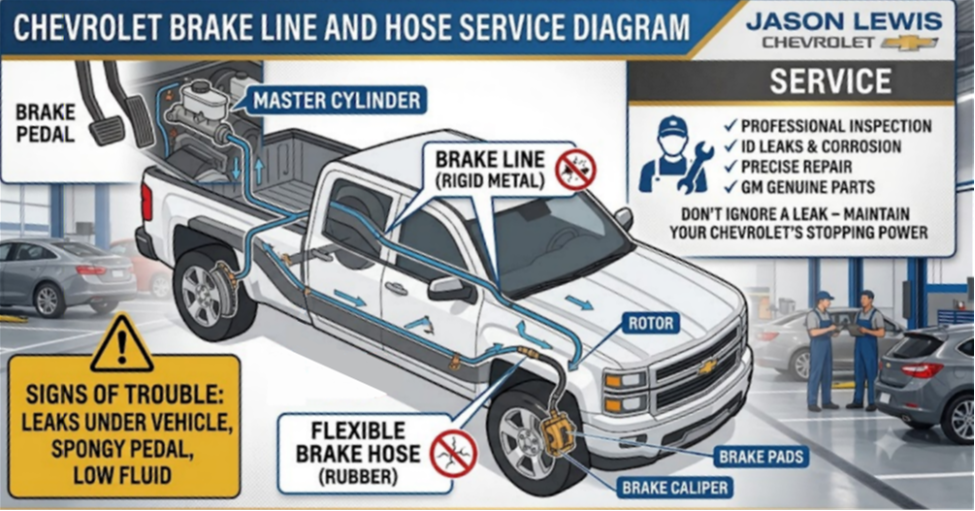
Brake lines are typically rigid tubes that carry brake fluid through the vehicle. They connect different parts of the hydraulic braking system and may run from the master cylinder toward the brakes at the wheels.
Because brake lines are located underneath the vehicle, they may be exposed to:
- Road debris
- Moisture
- Corrosion
- Road salt
- Dirt
- Other environmental conditions
Brake Hoses
Brake hoses are flexible sections of the braking system.
They are necessary because some components of the braking system move relative to the vehicle.
For example, the wheels and suspension move as you drive and steer. Flexible brake hoses allow brake fluid to travel to the brakes while accommodating that movement.
Brake hoses can eventually become cracked, damaged, worn, or otherwise compromised.
Why Are Brake Lines and Hoses Important?
Your Chevrolet's braking system relies on hydraulic pressure.
When you press the brake pedal, brake fluid must travel through the hydraulic system to apply the brakes. If a brake line or hose develops a significant leak, the system may lose brake fluid and hydraulic pressure. That can affect braking performance.
In simple terms: The brake pedal creates pressure. Brake fluid carries that pressure. Brake lines and hoses help deliver the fluid to the brakes.
If the system cannot maintain the proper pressure, the brakes may not work as intended.
Signs Your Chevrolet May Have a Brake Line or Hose Problem
Brake line and hose problems can produce several warning signs, including:
- Brake fluid leaking underneath the vehicle
- Soft or spongy brake pedal
- Brake warning light illuminated
- Reduced braking performance
- Visible corrosion on brake lines
- Cracked, swollen, or damaged brake hoses
- Low brake fluid level
- Vehicle pulling during braking
Have Your Braking System Inspected If You Notice:
- A brake fluid leak under the vehicle
- A brake warning light
- A soft or spongy brake pedal
- A brake pedal that sinks toward the floor
- A sudden change in braking performance
- Reduced braking ability
- Low brake fluid
- Visible corrosion or damage to a brake line
- A cracked, swollen, or damaged brake hose
- Brake fluid near a wheel or underneath the vehicle
A brake fluid leak is particularly important to address.
If you see fluid leaking from your Chevrolet or notice a sudden change in how the brake pedal feels, the vehicle should be inspected as soon as possible.
What Does Brake Fluid Look Like?
Brake fluid can vary in appearance depending on the type of fluid and its condition.
A fluid leak underneath your Chevrolet should not automatically be assumed to be brake fluid. Vehicles contain several different fluids.
However, if you suspect a brake fluid leak, do not ignore it.
The location and appearance of the fluid can help technicians identify the source of a leak, but a proper inspection is needed to determine whether the braking system is affected.
What Causes Brake Lines and Hoses to Fail?
Brake lines and hoses can develop problems for several reasons.
Corrosion
Metal brake lines can corrode over time, particularly when exposed to moisture, road salt, and other environmental conditions.
Normal Aging
Brake hoses and other rubber components can age over time.
Physical Damage
Road debris or other physical damage can affect a brake line or hose.
Cracking or Deterioration
Flexible brake hoses may eventually develop cracks or other signs of deterioration.
Connections and Fittings
A leak may also occur at a connection, fitting, or other component of the hydraulic braking system.
What Happens If You Ignore a Brake Line or Hose Problem?
A brake line or hose problem should not be ignored.
A small leak may become worse over time. If brake fluid continues to escape, the braking system may lose hydraulic pressure.
Depending on the severity of the problem, delaying service may result in:
- Reduced braking performance
- A soft or sinking brake pedal
- Loss of brake fluid
- Damage to other brake components
- Increased stopping distance
- A more expensive repair
- Potentially unsafe braking conditions
A brake fluid leak is not a problem that should be addressed simply by repeatedly adding more fluid. The source of the leak needs to be identified.
Can I Drive With a Brake Fluid Leak?
A suspected brake fluid leak should be treated seriously.
If the brake pedal feels soft, sinks toward the floor, or your Chevrolet has a significant loss of braking performance, continued driving may be unsafe.
If you see a significant brake fluid leak or the brake warning light is illuminated, contact the service department before continuing to drive the vehicle.
A vehicle that cannot stop properly should not be driven.
What Does Brake Line and Hose Service Involve?
The appropriate repair depends on the location and severity of the problem.
Our technicians may:
1. Inspect the Braking System
The braking system can be inspected for signs of leaks, damage, corrosion, and other concerns.
2. Identify the Source of the Leak
If brake fluid is leaking, the source must be identified before the correct repair can be determined.
3. Inspect Brake Lines and Hoses
The lines and hoses can be examined for corrosion, cracking, swelling, physical damage, and other conditions.
4. Inspect Related Components
Other components of the hydraulic braking system may also need to be evaluated.
5. Recommend the Appropriate Repair
Depending on the problem, service may involve replacing a damaged brake hose, repairing or replacing a damaged brake line, or addressing another component causing the leak.
6. Check the Brake System
After the repair, the braking system can be checked to help verify proper operation.
Do Brake Lines and Hoses Need Regular Replacement?
Not necessarily.
Brake lines and hoses do not all have the same service life, and there is not a single replacement interval that applies to every Chevrolet.
They should be inspected for condition and replaced when they are damaged, leaking, excessively corroded, deteriorated, or otherwise no longer suitable for continued service.
The age of the vehicle, driving conditions, climate, and exposure to moisture or road salt can all affect the condition of these components.
What Are the Benefits of Proper Brake Line and Hose Service?
Properly functioning brake lines and hoses help the hydraulic braking system maintain the pressure needed to apply the brakes.
Addressing a damaged or leaking component may help:
- Restore proper brake fluid flow
- Help maintain hydraulic brake pressure
- Prevent further loss of brake fluid
- Help protect other brake components
- Restore proper brake pedal feel
- Help maintain braking performance
Because brake lines and hoses are part of the hydraulic braking system, problems should be addressed promptly.
Why Choose Jason Lewis Chevrolet for Brake Line and Hose Service?
Brake line and hose problems can sometimes be difficult to identify because the source of a leak is not always obvious.
Brake fluid may travel along components before reaching the ground, making the location of a puddle different from the actual source of the leak.
At Jason Lewis Chevrolet, our service technicians can inspect the braking system and help identify the source of the problem.
Depending on the repair and your Chevrolet, service may include GM Genuine Parts or ACDelco parts appropriate for the vehicle and repair.
Our goal is to identify the actual problem, explain what we find, and recommend the appropriate repair.
How Much Does Brake Line and Hose Service Cost?
The cost of brake line and hose service varies depending on:
- Your Chevrolet model
- The location of the problem
- Whether a brake line or hose is affected
- The extent of corrosion or damage
- The parts required
- Whether additional brake-system repairs are needed
The best way to determine the cost is to have the braking system inspected and receive an estimate based on the actual condition of your Chevrolet.
Frequently Asked Questions About Brake Lines and Hoses
What is the difference between a brake line and a brake hose?
A brake line is generally a rigid tube that carries brake fluid through the vehicle. A brake hose is a flexible section that allows brake fluid to travel to components that move with the suspension or wheels.
How do I know if my brake line is leaking?
Possible signs include brake fluid under the vehicle, low brake fluid, a soft or sinking brake pedal, a brake warning light, or reduced braking performance. The source of a leak should be professionally inspected.
Can a brake hose leak?
Yes. A brake hose can develop cracks, deterioration, physical damage, or other problems that may result in a brake fluid leak.
Can a damaged brake line cause a soft brake pedal?
Yes. A leak in the hydraulic braking system can reduce brake fluid and hydraulic pressure, which may affect brake pedal feel and braking performance. However, a soft pedal can have other causes as well.
How long do brake lines and hoses last?
There is no universal replacement interval for every vehicle. Their condition depends on factors such as vehicle age, climate, road conditions, corrosion, and physical damage.
Can rust damage brake lines?
Yes. Corrosion can weaken metal brake lines and eventually contribute to leaks.
Can I drive with a damaged brake hose?
It depends on the condition of the hose and the braking system. A damaged or leaking brake hose can affect braking performance. If you notice a brake fluid leak or a significant change in brake pedal feel, have the vehicle inspected before continuing to drive.
Is brake fluid leaking from my vehicle always a brake line problem?
No. A brake fluid leak may come from several different components of the hydraulic braking system. The source of the leak must be identified to determine the appropriate repair.
Keep Your Chevrolet Braking Safely
Brake lines and hoses are important parts of your Chevrolet's braking system.
If you notice brake fluid under your vehicle, a soft or sinking brake pedal, a brake warning light, or a sudden change in braking performance, do not ignore the problem.
Jason Lewis Chevrolet can inspect your braking system, help identify the source of the concern, and recommend the appropriate repair.
We proudly serve Chevrolet drivers in Livingston, Cookeville, Crossville, Sparta, Jamestown, Fairfield Glade, Monterey, and surrounding communities.
Do You Think You Have a Leak in your Brake Lines and Hoses
If you think you have a leak in your Brake Lines and Hoses, Jason Lewis Chevrolet can help you determine what to do next. Do not drive farther than necessary, but come to our dealership immediately.
We proudly serve Chevrolet drivers in Livingston, Cookeville, Crossville, Monterey, Sparta, Jamestown, Fairfield Glade, and surrounding East Tennessee communities.