





Chevrolet Coolant & Antifreeze Service
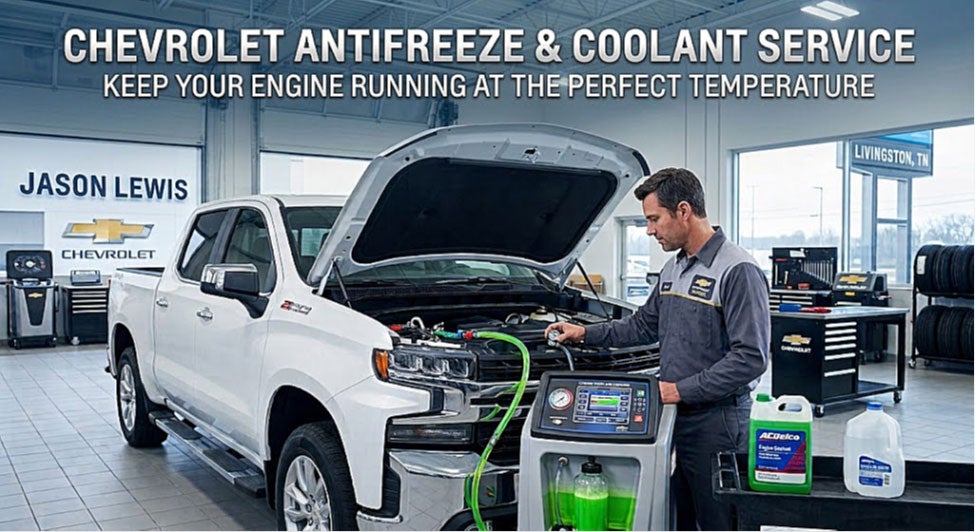
Automobile Engines Need to Run at the Proper Temperature
Your Chevrolet's engine produces a great deal of heat while it is running. The cooling system is designed to control that heat and help keep the engine operating at the proper temperature. Coolant and antifreeze play an important role in that process. They help protect your Chevrolet's engine during both the coldest winter nights and the hottest summer days.
If your coolant level is low, the coolant is old or contaminated, or you notice signs of a coolant leak, the service team at Jason Lewis Chevrolet can help find the cause and determine what your vehicle needs.
What Is Coolant and Antifreeze?
The terms coolant and antifreeze are often used to describe the same fluid, but there is a slight difference. Antifreeze is the concentrated fluid that helps protect against freezing and provides protection for the cooling system. When antifreeze is mixed with water at the proper ratio, it becomes engine coolant.
Your Chevrolet's cooling system uses this coolant to help carry heat away from the engine. The coolant then travels through the cooling system, including the engine and radiator, where heat is released before the coolant returns to the engine to continue the process.
Why Is Coolant Important in Winter?
Antifreeze is especially important when temperatures drop. Water can freeze, expand, and cause serious damage inside an engine's cooling system. Properly mixed antifreeze/coolant helps protect the cooling system from freezing in cold weather. Middle and East Tennessee can experience some very cold nights during January and February. A cooling system that is low on coolant or has an incorrect mixture may not provide the protection your Chevrolet needs. Cold weather is not the only reason to check your coolant, however.
Coolant Is Important During Tennessee Summers, Too
Your Chevrolet's cooling system works hard during hot weather. Driving in high temperatures, sitting in traffic, climbing hills, towing a trailer, or carrying heavy loads can all place additional demands on the cooling system. Coolant helps carry engine heat to the radiator, where that heat can be released. Proper coolant also helps raise the boiling point of the fluid and provides protection for the cooling system. A cooling system that is low on coolant or has another problem may have difficulty keeping the engine at the proper temperature.
Coolant is a year-round part of your Chevrolet's cooling system—not just a winter service.
What Parts Make Up the Cooling System?
Coolant is only one part of the system that keeps your Chevrolet's engine at the proper temperature. The cooling system includes components such as:
- Radiator
- Water pump
- Thermostat
- Radiator and heater hoses
- Cooling fans
- Coolant reservoir
- Heater core
- Engine cooling passages
Each part has a job to do. A problem with one component can affect the entire cooling system.
Does Your Chevrolet Have a Coolant Leak?
A low coolant level does not always mean that the coolant simply needs to be added. Your Chevrolet may have a leak somewhere in the cooling system. A leak can occur in the radiator, a hose, water pump, coolant reservoir, or another component. If coolant continues to escape, simply adding more coolant does not correct the problem.
Signs of a possible coolant leak include:
- Coolant spots or a puddle underneath your Chevrolet
- A sweet smell around the vehicle
- Low coolant levels
- Steam or vapor from under the hood
- An engine that is running hotter than normal
- A coolant warning message
- An overheating engine
If you notice these signs, it is a good idea to have the cooling system inspected.
What About Radiator Stop-Leak Products?
You may have seen products marketed as a quick way to stop a radiator or cooling-system leak. These products may appear to offer an easy solution, but they do not repair a damaged radiator, hose, water pump or other cooling-system component. Depending on the product and the condition of the vehicle, stop-leak products can also create problems within the cooling system.
If your Chevrolet is losing coolant, it is better to find out why the coolant is being lost. A proper inspection can help identify the source of the leak and determine what repair is needed.
What Happens When Coolant Is Low?
Coolant helps remove heat from the engine. When the cooling system does not have enough coolant, the engine may not be able to control its temperature properly. An engine that becomes too hot can suffer serious damage. For that reason, an overheating warning should not be ignored.
If your Chevrolet's temperature gauge moves into the hot range, a warning message appears, or you see steam coming from under the hood, safely stop the vehicle when possible and allow it to cool. Continuing to drive an overheating vehicle can turn a cooling-system problem into a much more expensive engine repair.
When Should Chevrolet Coolant Be Replaced?
There is no single coolant replacement interval that applies to every Chevrolet. The correct service interval can depend on the Chevrolet model, engine, model year, coolant type and other factors. Your owner's manual provides information specific to your vehicle.
Coolant can also become contaminated or lose some of its protective properties over time. During service, a technician can check the condition and level of the coolant and look for signs of a cooling-system problem.
What Happens During Coolant Service?
The exact service performed depends on your Chevrolet and what the cooling system needs. A technician may:
- Check the coolant level and condition
- Inspect the cooling system for signs of leaks
- Inspect hoses and other cooling-system components
- Check the radiator and coolant reservoir
- Look for signs of overheating
- Check the cooling system according to Chevrolet service procedures
- Replace coolant when service is needed
- Address the source of a coolant leak when one is found
The goal is not simply to add more coolant. The goal is to make sure the cooling system is working properly and that your Chevrolet has the protection it needs.
Why Choose Jason Lewis Chevrolet for Coolant Service?
Your Chevrolet is one of the more valuable things you own. Regular maintenance can help protect that investment and may help prevent a small problem from becoming a much larger repair.
The service team at Jason Lewis Chevrolet understands the cooling systems used in Chevrolet vehicles and can help determine what your vehicle needs. Whether you are concerned about winter protection, summer overheating, a low coolant level or a possible leak, we can help you find the cause of the problem.
Do you Need Your Coolant and Antifreeze serviced?
Winter is just around the corner. Is your antifreeze working?
Frequently Asked Questions About Chevrolet Coolant & Antifreeze
Is coolant the same thing as antifreeze?
The terms are often used interchangeably. Antifreeze is generally the concentrated fluid, while coolant is the mixture used in the vehicle's cooling system.
Can I add water to my Chevrolet's coolant?
The correct coolant mixture depends on the vehicle and the coolant being used. Follow the instructions in your owner's manual or have the cooling system checked by a qualified technician.
Why is my Chevrolet losing coolant?
A cooling system can lose coolant because of a leak in the radiator, hose, water pump, reservoir or another component. If the coolant level continues to drop, the cause should be identified.
Can a coolant leak cause my Chevrolet to overheat?
Yes. A significant loss of coolant can reduce the cooling system's ability to remove heat from the engine and may lead to overheating.
Is coolant only important during winter?
No. Coolant is important throughout the year. It helps protect against freezing during cold weather and helps the cooling system manage engine heat during hot weather.
How do I know if my Chevrolet needs coolant service?
Low coolant, repeated coolant loss, an overheating engine, a coolant warning, visible leaks or other cooling-system concerns are reasons to have the vehicle inspected.
What should I do if my Chevrolet is overheating?
If your Chevrolet is overheating, safely stop the vehicle as soon as you can. Continuing to drive an overheating vehicle can cause serious engine damage. Allow the vehicle to cool and have the cooling system inspected.
Your Chevrolet needs a cooling system that can handle the changing Tennessee weather. From freezing winter temperatures to hot summer days, proper coolant helps protect the engine and the cooling system throughout the year.
If your Chevrolet is low on coolant, showing signs of a leak, overheating or simply due for cooling-system service, schedule an appointment with Jason Lewis Chevrolet in Livingston, Tennessee.
Livingston
Schedule Chevrolet Coolant and Antifreeze Service
If your Chevrolet is running hotter than normal, let our service team take a closer look.
We proudly serve Chevrolet drivers in Livingston, Cookeville, Crossville, Sparta, Jamestown, Fairfield Glade, and surrounding commnuties.