





Chevrolet Vehicle Electrical Systems
Chevrolet Vehicle Electrical System
Your Chevrolet depends on its electrical system to start the engine, recharge the battery, power lights and accessories, and operate many of its electronic features. When something goes wrong, the cause may not be obvious. A weak battery, faulty alternator, damaged wire, poor electrical connection, or another failed component can produce similar symptoms.
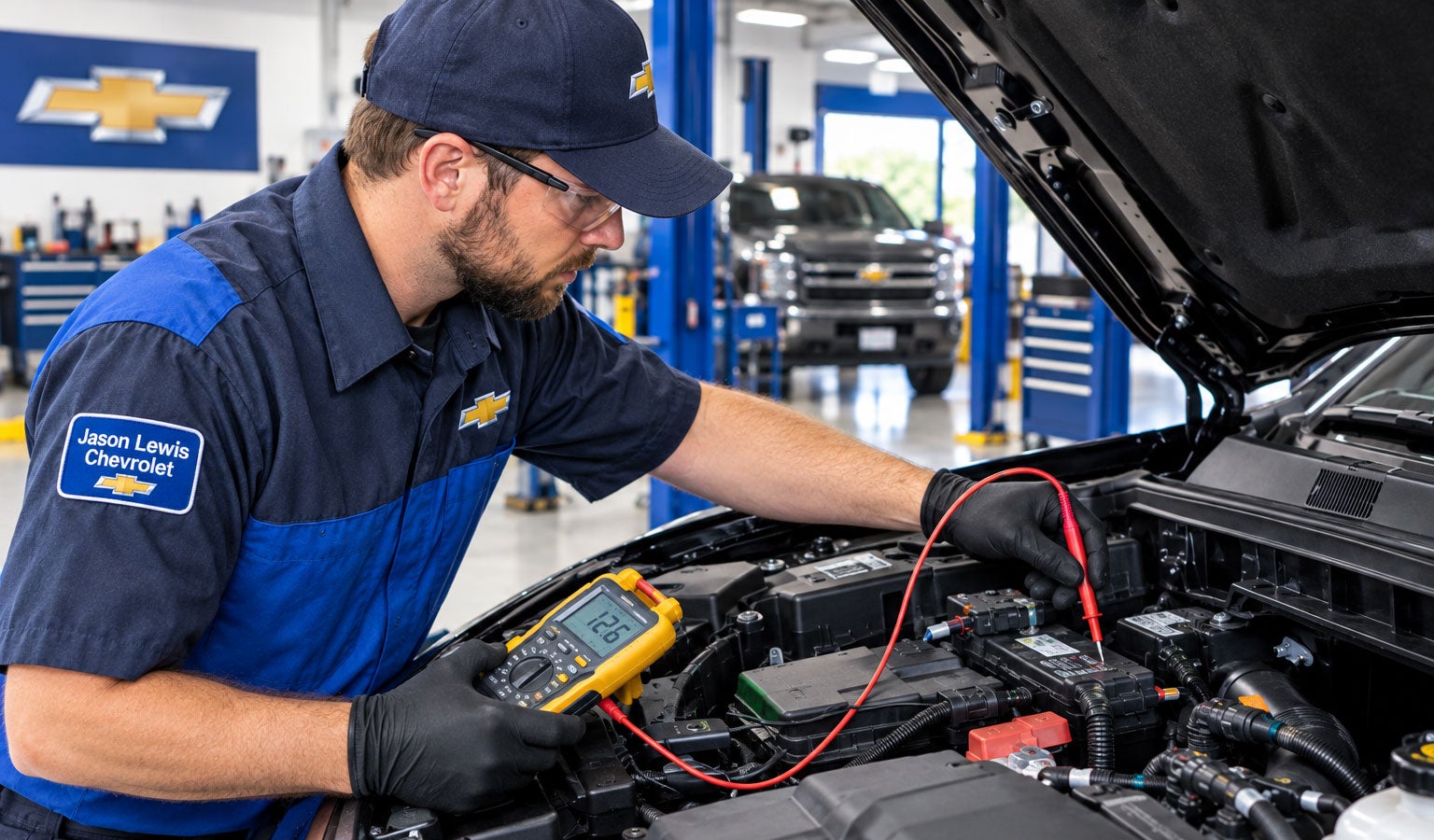
At Jason Lewis Chevrolet in Livingston, TN, electrical system diagnostics help identify the source of a problem so the appropriate repair can be recommended. If your Chevrolet will not start, electrical accessories are not working properly, or warning lights have appeared on the dashboard, our service team can help determine what may be causing the issue.
Schedule electrical system diagnostics at Jason Lewis Chevrolet. Call 931-228-5279.
Schedule an AppointmentSigns Your Chevrolet May Need Electrical System Diagnostics
Electrical problems can affect several vehicle systems. Pay attention to changes in how your Chevrolet starts, runs, or operates.
Common warning signs include:
- The engine will not start. The engine may not crank, may crank slowly, or may start inconsistently.
- The battery repeatedly loses its charge. You may need to jump-start your vehicle more than once.
- Lights flicker or become dim. Headlights, dashboard lights, or interior lights may change in brightness.
- Electrical accessories stop working. Power windows, door locks, displays, or other electrical features may stop working or behave unpredictably.
- Warning lights appear. A battery or charging-system warning light may indicate a problem that needs attention.
- Fuses keep blowing. A fuse that repeatedly fails may indicate an electrical fault in the circuit it protects.
- The vehicle has trouble starting after sitting. An electrical component may continue drawing power while the vehicle is parked, or the battery may not be holding a charge.
These symptoms do not always point to the same cause. For example, dim lights and difficulty starting may result from a weak battery, a charging-system problem, or a poor electrical connection. Testing helps narrow down the possibilities.
What Causes Automotive Electrical Problems?
Your Chevrolet's electrical system includes the battery, starter, alternator, wiring, fuses, relays, sensors, and electronic control systems. A problem with one component or connection can affect other parts of the vehicle.
Battery Problems
The battery supplies the electrical power needed to start the engine and supports electrical systems when the engine is off. A weak, damaged, or discharged battery can cause slow starting, clicking sounds, dim lights, and other electrical symptoms.
If your battery repeatedly loses its charge, replacing it may not solve the problem. The cause could be elsewhere in the electrical system.
Learn more about Battery Service and Replacement at Jason Lewis Chevrolet.
Starter and Charging-System Problems
The starter uses electrical power to turn the engine over when you start your vehicle. The alternator generates electrical power while the engine runs and helps recharge the battery.
A faulty starter or starter circuit can prevent the engine from cranking. A charging-system problem can leave the battery undercharged and eventually prevent the vehicle from starting.
Learn more about Starter and Alternator Service at Jason Lewis Chevrolet.
Damaged Wiring or Poor Electrical Connections
Electrical current must travel through wires, connectors, and ground connections to reach the components that need power. Loose connections, corrosion, damaged insulation, or broken wires can interrupt that flow.
Depending on the circuit involved, these problems may cause intermittent starting, flickering lights, malfunctioning accessories, or other electrical issues.
Blown Fuses and Faulty Relays
Fuses protect electrical circuits from excessive current. Relays act as electrically controlled switches that allow certain components to operate.
A blown fuse may cause a particular feature to stop working. If the same fuse continues to blow, the underlying electrical fault needs to be identified rather than repeatedly replacing the fuse.
Sensors and Electronic Control Systems
Modern Chevrolet vehicles use electronic controls to manage many vehicle functions. Sensors provide information to control modules, which use that information to help operate specific systems.
An electrical fault, damaged wiring, or a problem with a sensor or control module can trigger a warning light or affect vehicle operation. Diagnostic trouble codes can help guide the investigation, but additional testing may be needed to identify the actual cause.
How Electrical System Diagnostics Work
Electrical system diagnostics involve more than checking the battery or connecting a scan tool. The testing process depends on the symptoms, the vehicle, and the system involved.
1. Review the Symptoms
The diagnostic process begins with understanding what is happening. Does the vehicle fail to start every time or only occasionally? Does the battery lose its charge overnight? Do the lights flicker when other electrical features are used?
These details help direct the technician toward the systems that may be involved.
2. Inspect the Relevant Components
Depending on the reported problem, the inspection may include the battery, terminals, wiring, connectors, fuses, grounds, and related components. Visible damage, corrosion, or loose connections can provide important clues.
3. Test the Electrical System
Testing depends on the suspected fault. It may include checking battery condition, charging-system performance, electrical voltage, circuit continuity, or current flow. An electronic scan tool may also be used to retrieve diagnostic trouble codes from applicable vehicle systems.
The goal is to gather evidence about how the affected system is working rather than assume a particular component has failed.
4. Identify the Source of the Problem
Test results help narrow down the cause. A discharged battery, for example, may be the primary problem, or it may be a result of a charging fault or unwanted electrical current draw while the vehicle is parked.
A diagnostic trouble code can identify a system or condition that needs attention, but it does not automatically mean the component named in the code must be replaced. Further testing may be necessary.
5. Explain the Findings and Recommended Repair
Once the available test results have been evaluated, the findings can help determine the appropriate repair. Depending on the cause, the solution may involve a battery, starter, alternator, wiring repair, electrical connection, fuse, or another component.
The purpose of diagnostics is to identify the problem as accurately as possible before deciding what needs to be repaired.

Why Diagnose the Problem Before Replacing Parts?
Several different electrical faults can produce similar symptoms. Replacing a component without determining the cause may leave the original problem unresolved.
For example, if your Chevrolet's battery repeatedly loses its charge, the battery itself may be weak or damaged. However, the alternator may not be recharging it properly, a connection may be interrupting the charging process, or another component may be drawing power while the vehicle is parked.
Replacing the battery alone would not correct those other problems.
Electrical system diagnostics help narrow down the cause, guide the repair decision, and reduce the risk of replacing parts that are still working properly. If your Chevrolet has a recurring starting problem, warning lights, or electrical features that no longer work as expected, schedule an inspection rather than continuing to guess at the cause.
Why Choose Jason Lewis Chevrolet for Electrical System Diagnostics?
When an electrical problem affects your Chevrolet, identifying the cause is an important first step toward getting the vehicle back to proper operation.
Jason Lewis Chevrolet in Livingston, Tennessee, provides a local service option for Chevrolet owners who need help with starting problems, charging-system concerns, electrical faults, and malfunctioning vehicle electronics.
Our goal is to help identify the source of the problem and determine what repair is needed. Addressing the cause, rather than simply replacing a part based on symptoms, helps you make a more informed service decision.
If you are unsure whether your vehicle needs battery service, starter or alternator service, or broader electrical diagnostics, describing the symptoms to our service team is a good place to start.
Electrical System Diagnostics FAQs
What is included in an electrical system diagnostic?
The tests depend on the symptoms and the vehicle system involved. Diagnostics may include a visual inspection, battery and charging-system tests, voltage or circuit measurements, wiring and connection checks, and an electronic scan for diagnostic trouble codes.
Not every vehicle needs every test. The technician uses the reported symptoms and test results to determine the next steps.
Can a bad battery cause other electrical problems?
Yes. A weak or discharged battery can cause slow starting, clicking sounds, dim lights, and other electrical symptoms. However, similar symptoms can result from a charging-system fault, poor connections, or another electrical problem. Testing helps determine whether the battery is the cause or whether another issue needs attention.
Why does my battery keep dying after I replace it?
A new battery can lose its charge if the alternator is not recharging it properly, an electrical connection is faulty, or a component continues drawing power while the vehicle is parked. The battery may also have a problem of its own. Electrical testing can help identify the reason the battery keeps losing its charge.
Can an electrical problem cause my Chevrolet not to start?
Yes. A starting problem may involve the battery, starter, starter circuit, electrical connections, or another vehicle system. In some cases, the engine may crank but fail to start because of a separate engine-management or fuel-related problem. Proper diagnosis helps distinguish between these possibilities.
Should I keep driving if my battery warning light comes on?
A battery or charging-system warning light may indicate that the battery is not being recharged properly. The vehicle may continue running for a time, but it could eventually lose electrical power and stop. Reduce unnecessary electrical use and find a safe place to stop if the vehicle shows signs of losing power. Consult your owner's manual and arrange for service as soon as it is safe to do so.
Schedule Electrical System Diagnostics in Livingston, TN
Electrical problems can be frustrating, especially when the symptoms come and go or a battery replacement does not solve the issue. Testing can help identify the cause and determine what your Chevrolet needs.
We proudly serve Chevrolet drivers in Livingston, Cookeville, Crossville, Monterey, Sparta, Jamestown, Fairfield Glade, and surrounding East Tennessee communities.