





Exhaust System Service and Repair
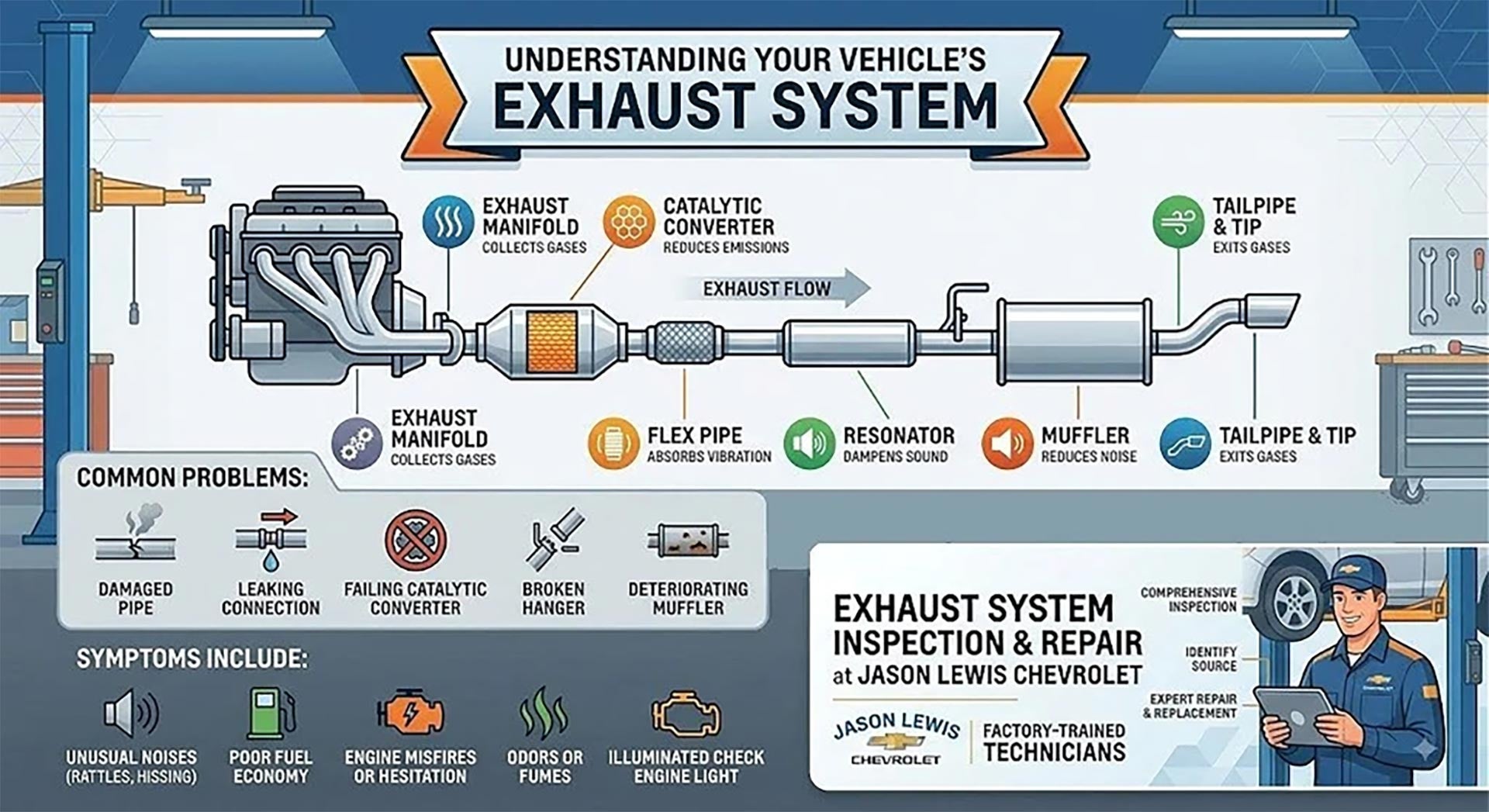
Exhaust System Service for Chevrolet Cars, Trucks and SUVs
Your Chevrolet's exhaust system does much more than carry exhaust gases away from the engine. It helps control harmful emissions, manages exhaust noise, and safely directs combustion gases away from the passenger compartment.
Because the exhaust system contains several interconnected components, a problem with one part can affect the performance of the entire system. A damaged pipe, leaking connection, failing catalytic converter, broken hanger, or deteriorating muffler can create symptoms ranging from unusual noises to an illuminated Check Engine Light.
At Jason Lewis Chevrolet, our factory-trained technicians can inspect your Chevrolet's exhaust system, identify the source of the problem, and recommend the appropriate repair or replacement.
What Does the Exhaust System Do?
Every time your engine burns fuel, it produces exhaust gases. The exhaust system collects those gases and carries them away from the engine and passenger compartment.
It also performs two other important jobs:
Controls emissions:
Emissions-control components help reduce harmful pollutants before exhaust gases leave the vehicle.
Reduces exhaust noise:
Components such as the muffler help control the sound produced by the engine and the movement of exhaust gases.
In simple terms
Your exhaust system helps move exhaust gases, control emissions, and reduce noise.
What Are the Main Parts of an Exhaust System?
The exact configuration varies by Chevrolet model and engine, but an exhaust system can include several important components.
Exhaust Manifold
The exhaust manifold collects exhaust gases from the engine's cylinders and directs them into the exhaust system. Because it is exposed to extremely high temperatures, a cracked manifold or leaking gasket can cause unusual noises and may affect engine and emissions-system operation.
Catalytic Converter
The catalytic converter is an important emissions-control component. It helps convert certain harmful pollutants in the exhaust gases into less harmful substances before they leave the vehicle.
A catalytic converter problem may be associated with a Check Engine Light, reduced performance, or an emissions-test failure.
Exhaust Pipes
Exhaust pipes connect the various components of the system and carry gases toward the rear of the vehicle. Corrosion, road damage, cracks, or failed connections can cause exhaust leaks.
Resonator
Some Chevrolet vehicles are equipped with a resonator. Its job is to help modify and control exhaust sound before the gases reach the muffler.
Muffler
The muffler is designed primarily to reduce exhaust noise. Rust, corrosion, internal damage, or holes can cause a vehicle to become noticeably louder.
Tailpipe
The tailpipe is the final section of the exhaust system. It directs exhaust gases away from the vehicle after they have passed through the system's emissions and noise-control components.
Hangers, Brackets and Connections
Exhaust components are held in position by hangers, brackets, clamps, and other connections. A broken hanger or damaged connection can allow an exhaust component to move, rattle, or hang lower than it should.
Signs Your Exhaust System May Need Service
Exhaust problems do not always announce themselves with a warning light. Sometimes the first indication is a sound, smell, vibration, or visible change underneath the vehicle.
Have your exhaust system inspected if you notice:
- An exhaust that suddenly becomes louder
- Hissing, ticking, rattling, or roaring sounds
- A noticeable exhaust smell
- Exhaust fumes inside the passenger compartment
- A Check Engine Light
- A failed emissions test
- Visible rust, holes, or damaged exhaust components
- An exhaust pipe or muffler that appears to be hanging lower than normal
- Excessive vibration from underneath the vehicle
- Changes in engine performance or fuel economy
Some of these symptoms can have causes outside the exhaust system, which is why proper diagnosis is important.
Schedule Your Exhaust System Service and Repair
Call and make an appointment, and we will find the problem.
What Causes Exhaust System Problems?
Exhaust components operate in an extremely hot and demanding environment. Over time, heat cycles, moisture, corrosion, road debris, and normal wear can take their toll.
Common causes of exhaust problems include:
Rust and Corrosion
Moisture and condensation can contribute to corrosion, particularly as an exhaust system ages. Rust can eventually weaken pipes, mufflers, connections, and other components.
Road Damage
Road debris, potholes, and other impacts can damage or bend exhaust pipes and components underneath the vehicle.
Broken Hangers or Brackets
When an exhaust hanger or bracket breaks, the exhaust system may move excessively or make rattling noises.
Cracks and Failed Connections
A crack, damaged gasket, or failed connection can allow exhaust gases to escape before they reach the tailpipe.
Component Failure
Catalytic converters, mufflers, sensors, and other exhaust-related components can eventually develop problems that require diagnosis, repair, or replacement.
An exhaust leak is more than an annoying noise. Where the leak occurs matters. Exhaust gases escaping from a damaged pipe, manifold, connection, or other component can create unpleasant odors and may allow exhaust gases to enter areas where they should not be.
If you smell exhaust inside the passenger compartment, have the vehicle inspected as soon as possible. An exhaust leak can also affect how the vehicle's emissions-control system operates. In some situations, a leak can interfere with sensor readings or contribute to a Check Engine Light.
An emissions-test failure does not automatically mean that the catalytic converter needs to be replaced. Several conditions can contribute to an emissions problem, including:
- A catalytic converter that is not operating properly
- Exhaust leaks
- Faulty oxygen or other emissions-related sensors
- Engine misfires
- Fuel or air mixture problems
- Other emissions-control system faults
The important step is identifying why the vehicle failed rather than replacing parts without first determining the underlying problem.
Our technicians can diagnose the vehicle and determine whether the problem is related to the exhaust system, emissions-control components, or another vehicle system.
A louder exhaust does not necessarily mean that the muffler is the problem.
A sudden increase in exhaust noise can result from:
- A hole or crack in the muffler
- A damaged exhaust pipe
- A failed connection
- A broken exhaust hanger
- A damaged resonator
- An exhaust manifold leak
- Other exhaust-system damage
This is why an inspection is important. The source of the noise may not be the component you can see or hear most clearly. For muffler-specific problems, see our Muffler Repair and Replacement page.
An exhaust inspection begins with listening to the customer's description of the problem and identifying when the noise, smell, warning light, or other symptom occurs.
The technician can then inspect the exhaust system for signs of:
- Leaks
- Rust and corrosion
- Cracks or holes
- Damaged pipes
- Loose or broken hangers
- Damaged connections
- Muffler or resonator problems
- Catalytic converter concerns
- Other visible damage
Additional diagnostic procedures may be appropriate when a Check Engine Light or emissions-related problem is present. The goal is to identify the source of the problem before recommending a repair.
Not every exhaust problem requires replacing an entire system.
Depending on the condition and location of the damage, a repair may involve a damaged connection, hanger, pipe section, or other component.
Replacement may be necessary when a component is severely corroded, structurally damaged, internally damaged, or no longer repairable.
Our technicians will evaluate the condition of the affected components and recommend the repair that is appropriate for your Chevrolet.
Why Professional Exhaust Service Matters
The exhaust system operates at extremely high temperatures and contains components that are important to both emissions control and vehicle safety.
Attempting to diagnose an exhaust problem based only on the noise or visible damage can sometimes lead to replacing the wrong part.
Professional inspection can help determine:
- Where the problem is located
- Whether an exhaust leak is present
- Whether emissions components are functioning properly
- Whether a component can be repaired
- Whether replacement is necessary
- Whether another vehicle system may be causing the symptom
Chevrolet Exhaust System Service at Jason Lewis Chevrolet
Your exhaust system is an important part of your Chevrolet's operation. Whether you have noticed a new exhaust noise, smell fumes, failed an emissions test, or simply want an unusual symptom inspected, don't ignore the problem.
The factory-trained technicians at Jason Lewis Chevrolet can inspect your Chevrolet's exhaust system and help determine the cause of the problem.
From exhaust leaks and damaged pipes to catalytic converters, mufflers, hangers, and other components, we can help keep your Chevrolet's exhaust system operating as it should.
Schedule Exhaust System Service
If your Chevrolet is louder than normal, has an exhaust smell, has failed an emissions test, or is showing other signs of an exhaust problem, contact Jason Lewis Chevrolet Service.
Call our Service Department to schedule an inspection and diagnosis.
Schedule Your Exhaust System Service and Repair Today
Call and make an appointment, and we will service or repair your Exhaust System as needed.
Schedule Exhaust System Repair Call Jason Lewis Chevrolet
We proudly serve Chevrolet drivers in Livingston, Cookeville, Crossville, Sparta, Jamestown, Fairfield Glade, Monterey, and surrounding communities.