



Wheel Alignment Service
Is Your Vehicle Pulling to One Side?
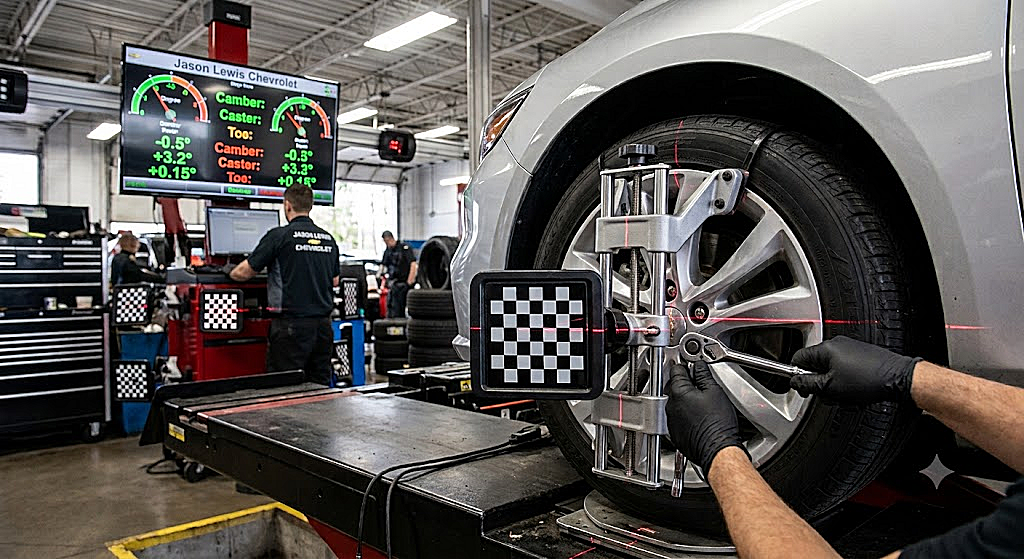
A properly aligned vehicle helps your tires meet the road at the angles specified for your vehicle.
When those angles change, your vehicle may pull to one side, your steering wheel may no longer sit straight, or your tires may begin to wear unevenly.
A wheel alignment can help identify and correct alignment-related problems and help protect your tires from unnecessary wear.
Is Your Vehicle Pulling or Wearing Tires Unevenly?
What Is a Wheel Alignment?
A wheel alignment involves measuring and, when possible, adjusting the angles of the wheels and related suspension components to meet the specifications appropriate for your vehicle.
The three primary alignment angles commonly discussed are camber, toe, and caster.
Camber refers to the inward or outward angle of the wheel when viewed from the front of the vehicle. Incorrect camber can contribute to uneven wear on the inside or outside edge of a tire.
Toe refers to the direction in which the tires point when viewed from above the vehicle. If the tires are not pointing in the appropriate direction relative to one another, the vehicle may experience irregular tire wear.
Caster refers to the angle of the steering axis when viewed from the side of the vehicle. Caster can affect steering stability, steering feel, and how the steering wheel returns after a turn.
The correct alignment settings depend on the specific vehicle.
A steering wheel that appears straight does not necessarily prove that the vehicle is properly aligned.
How Does a Vehicle Become Out of Alignment?
A vehicle can become misaligned in several ways.
Hitting a pothole
A significant impact with a pothole can affect wheel alignment or damage a wheel, tire, steering component, or suspension component.
Hitting a curb
Even a single hard impact with a curb can potentially change alignment angles or damage related components.
Driving over rough roads
Repeated impacts from rough roads, gravel roads, railroad crossings, and other severe road conditions can stress steering and suspension systems.
An accident or collision
A collision can affect alignment even when the vehicle appears to have relatively minor exterior damage.
Worn or damaged suspension components
Alignment adjustments may not correct the underlying problem if a steering or suspension component is worn, damaged, or bent.
Normal wear over time
Components such as bushings, ball joints, tie rods, and other steering or suspension parts can wear over time.
A proper alignment may require more than simply adjusting the wheels. The condition of the vehicle's steering and suspension components may need to be evaluated first.
Signs Your Vehicle May Need a Wheel Alignment
Your vehicle may need an alignment inspection if you notice:
-
Your vehicle pulls to one side — it consistently drifts or pulls left or right while driving on a reasonably level road
-
Your steering wheel is not straight — it is noticeably off-center while the vehicle is traveling straight
-
Your tires are wearing unevenly, especially wear that is significantly greater on one side or edge
-
Your vehicle feels different after hitting a pothole or curb
-
Your vehicle does not feel like it is tracking properly, wanders, or requires frequent steering corrections
However, tire pressure, road conditions, tire wear, tire balance, and other factors can also affect how a vehicle tracks. If something about your vehicle's steering or handling feels different, do not ignore the change.
If your vehicle is pulling or your steering wheel is off-center, our service professionals can help inspect the vehicle and determine what may be causing the problem.
Schedule an Alignment InspectionWhat Happens When a Vehicle Is Out of Alignment?
A vehicle that is out of alignment may experience:
-
Uneven or accelerated tire wear, and reduced tire life
-
A vehicle that pulls or drifts, with an off-center steering wheel
-
Changes in steering feel and reduced driving comfort
-
Potentially less predictable handling
Uneven tire wear can be particularly expensive because it may shorten the useful life of a tire that otherwise could have lasted much longer.
Alignment Problems Can Damage Your Tire Investment
New tires can represent a significant expense. If a vehicle is driven with an alignment problem, the tires may wear unevenly. In some cases, a tire can develop severe wear on one part of the tread while other areas still appear to have usable tread — meaning a vehicle owner may need to replace tires sooner than expected.
Maintaining proper alignment can help:
-
Promote more even tire wear
-
Help maximize the useful life of your tires
-
Protect your tire investment
-
Help maintain predictable handling
-
Reduce the possibility of alignment-related tire damage
A wheel alignment is often less expensive than prematurely replacing a set of tires.
Alignment Is More Than Simply Straightening the Steering Wheel
A steering wheel that appears straight does not necessarily prove that the vehicle is properly aligned. Likewise, a vehicle that pulls to one side does not automatically mean that an alignment is the only problem.
The vehicle must be measured against the alignment specifications appropriate for that specific vehicle. The correct procedure can vary depending on the vehicle.
A professional alignment inspection may identify
Wheel alignment angles, tire condition, tire inflation, wheel damage, steering components, suspension components, ride height, and other conditions affecting how the vehicle tracks.
A professional alignment service may involve
Inspecting the tires and wheels, checking steering and suspension components, measuring the vehicle's alignment angles, comparing measurements with vehicle-specific specifications, identifying conditions that may prevent a proper alignment, making appropriate adjustments when possible, and verifying the results.
When Should You Have Your Alignment Checked?
Consider having your vehicle's alignment inspected if:
-
You hit a significant pothole or curb
-
You are involved in an accident
-
Your vehicle begins pulling to one side
-
Your steering wheel is off-center
-
Your tires show unusual or uneven wear
-
Your vehicle's handling changes
-
Steering or suspension components are replaced
-
You are installing new tires and notice existing uneven wear
If you are uncertain whether your vehicle needs an alignment, an inspection can help determine whether an alignment problem may be present.
Help Keep Your Vehicle in Alignment
You cannot prevent every pothole or road impact. However, several habits can help you identify alignment problems earlier and protect your tires.
Check your tire pressure regularly
Improper tire pressure can affect handling and contribute to uneven tire wear.
Pay attention to changes in handling
If your vehicle suddenly pulls, wanders, or feels different, have the condition evaluated.
Inspect your tires
Look for unusual wear, particularly wear that appears greater on one side or edge of the tread.
Be careful around potholes and curbs
Avoiding severe impacts when possible can help reduce the risk of damage to tires, wheels, steering, and suspension components.
Have problems inspected promptly
If you hit a significant pothole or curb, do not wait for a tire to wear out before having the vehicle checked.
Follow recommended maintenance
Regular vehicle maintenance can help identify worn or damaged components that may affect alignment and tire wear.
Ask our service professionals what your vehicle may need.
Schedule ServiceWheel Alignment for Chevrolet, GM, and Other Vehicles
Jason Lewis Chevrolet provides alignment-related service for Chevrolet vehicles as well as other GM brands, including:
Our service department also serves many other domestic and foreign vehicle makes and models.
Whether you drive a Chevrolet Silverado, GMC Sierra, Ford F-150, Toyota Camry, Honda CR-V, Nissan Rogue, or another vehicle, contact Jason Lewis Chevrolet if you are experiencing pulling, uneven tire wear, an off-center steering wheel, or other handling concerns.
Is Your Vehicle Pulling or Wearing Tires Unevenly?
A vehicle that pulls to one side, has an off-center steering wheel, or develops unusual tire wear may need an alignment inspection.
However, those symptoms can also be caused by tires, wheels, steering components, suspension components, or other conditions.
Our service professionals can help inspect your vehicle and determine what may be causing the problem.
Wheel Alignment Frequently Asked Questions
"Click + for the answer"
A wheel alignment involves measuring and, when possible, adjusting the angles of the wheels and related components to meet the specifications appropriate for the vehicle.
Common causes include potholes, curbs, rough roads, collisions, worn or damaged steering and suspension components, and other impacts or changes affecting the vehicle.
Possible signs include pulling to one side, an off-center steering wheel, unusual tire wear, wandering, or changes in handling. These symptoms can have other causes, so a professional inspection may be needed.
An alignment problem can contribute to uneven or accelerated tire wear. In some cases, this can significantly shorten the useful life of a tire.
When alignment-related problems are properly corrected, the vehicle may experience more even tire wear. Proper tire pressure, rotation, tire condition, and other maintenance factors also affect tire life.
No. Wheel alignment addresses the angles of the wheels and related components. Tire balancing addresses weight distribution in the tire and wheel assembly.
No. Tire rotation moves tires to different positions on the vehicle to help promote more even tread wear. Wheel alignment addresses wheel angles and related vehicle components.
Not necessarily. Alignment needs can vary depending on the vehicle, driving conditions, impacts, component wear, and other factors. Follow your vehicle manufacturer's recommendations and have the alignment inspected if you notice symptoms or experience a significant impact.
An alignment problem may cause a vehicle to pull, but pulling can also be caused by tire pressure, tire condition, road conditions, steering components, suspension components, or other issues. A proper inspection can help identify the cause.
Jason Lewis Chevrolet's service department serves Chevrolet, Cadillac, GMC, Buick, and many other domestic and foreign vehicle makes and models. Contact the service department to ask about your specific vehicle.
Schedule Wheel Alignment Service
Your tires are a significant investment, and your vehicle's steering and suspension systems play an important role in how your vehicle drives.
If your vehicle is pulling, your steering wheel is off-center, or your tires are wearing unevenly, do not ignore the signs. Schedule a wheel alignment inspection with Jason Lewis Chevrolet.
We proudly serve Chevrolet drivers in Livingston, Cookeville, Crossville, Monterey, Sparta, Jamestown, Fairfield Glade, and surrounding East Tennessee communities.