




Reliable Starting Begins with a Healthy Battery
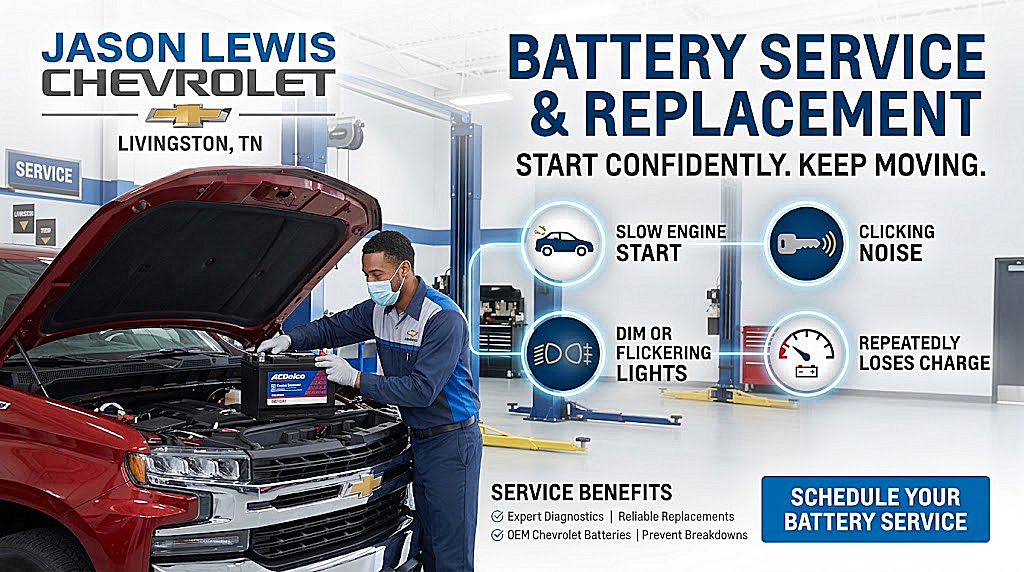
Your Chevrolet's battery supplies the power needed to start the engine and operate many electrical systems. If your vehicle starts slowly, clicks when you try to start it, or repeatedly loses its charge, the battery may need attention.
Jason Lewis Chevrolet can help determine whether your vehicle needs battery testing, replacement, or further diagnosis.
Schedule your service appointment today.
Schedule Chevrolet ServiceSigns Your Car Battery May Be Failing
A weak or failing battery can cause several noticeable symptoms. Recognizing these warning signs can help you address a problem before your vehicle leaves you stranded.
The Engine Cranks Slowly
When you start your Chevrolet, the engine may turn over more slowly than normal. This can indicate that the battery is not supplying enough power to start the engine. A weak battery is one possible cause, but a starting-system problem may produce similar symptoms.
Clicking When You Try to Start the Vehicle
You may hear a clicking sound when you turn the key or press the start button, or the engine may not crank at all. A weak battery or poor electrical connection can cause this problem. The starter and other electrical components may also need to be checked.
Dim Lights or Electrical Problems
Headlights that appear dim, flickering lights, or unusual electrical behavior may indicate a battery or charging-system problem. Loose connections and other electrical faults can cause similar symptoms.
The Battery Warning Light Comes On
A battery-shaped warning light on your dashboard can indicate a problem with the vehicle's charging system. It does not necessarily mean the battery itself has failed. The alternator, wiring, connections, or other components may need attention.
If the warning light stays on while the engine is running, consult your owner's manual and arrange appropriate service promptly.
The Battery Has Visible Damage or Corrosion
Corrosion around battery terminals can interfere with electrical connections. A swollen, cracked, or leaking battery needs professional attention. Do not attempt to open or handle a damaged battery.
Important: These symptoms do not always mean you need a new battery. Proper testing and diagnosis can help identify the cause before you spend money on a replacement.
What Causes a Car Battery to Fail?
Car batteries wear out over time, but several factors can affect how long they last and how well they perform.
- Age and normal wear: A battery gradually loses its ability to store and deliver electrical power.
- Temperature extremes: Heat can speed battery deterioration, while cold weather increases the power needed to start an engine.
- Frequent short trips: Short drives may not give the charging system enough time to replace the energy used during starting.
- Lights or accessories left on: Electrical components left operating while the vehicle is parked can drain the battery.
- Charging-system problems: An alternator or another charging-system component may not recharge the battery properly.
- Electrical drains: A faulty component may continue drawing power after the vehicle is turned off.
- Long periods without driving: A parked vehicle can gradually lose battery charge, even when it is not being used.
If your battery repeatedly loses its charge, replacing it may not solve the problem. The charging system and other possible causes should also be investigated.
How Is a Car Battery Tested?
Many modern automotive batteries are sealed or maintenance-free. A technician can test these batteries using electronic equipment connected to the external terminals. The battery does not need to be opened.
Electronic Battery Testing
A technician connects a suitable battery tester to the battery terminals. The equipment evaluates the battery's electrical response and starting capability. Depending on the results, the test may indicate that the battery is performing properly, needs charging and retesting, or may need replacement.
Measuring Battery Voltage
A voltage measurement provides information about the battery's state of charge. However, voltage alone cannot reliably determine the battery's remaining service life or confirm that it can supply enough power to start the engine.
Additional Testing When Needed
Depending on the battery and the initial test results, additional testing may be needed to evaluate its ability to deliver power under load. The battery's condition, charge level, and the vehicle manufacturer's testing procedures help determine the appropriate approach.
Test results help determine whether a battery is performing properly, needs charging and retesting, or may need replacement. If the battery tests satisfactorily but the vehicle still has starting problems, additional diagnosis may be needed.
When Does a Car Battery Need Replacement?
A battery should be replaced when testing shows that it can no longer perform as required or when physical damage makes continued use unsafe.
Choosing the correct replacement matters. Batteries differ in size, terminal arrangement, starting-power ratings, and technology. Some vehicles require specific battery types, including absorbed glass mat (AGM) batteries.
The correct replacement must meet your Chevrolet's specifications. Some vehicles may also require specific installation procedures or electronic-system settings after the battery is replaced.
Proper installation helps ensure that the battery connects correctly and that the vehicle's electrical systems operate as intended. The old battery should also be handled and recycled appropriately.
If you are unsure which battery your vehicle requires, contact Jason Lewis Chevrolet for assistance.
Why Does My New Battery Keep Going Dead?
A new battery that repeatedly loses its charge may point to a problem beyond the battery itself. Possible causes include a charging-system fault, an electrical component drawing power while the vehicle is parked, or connections that are loose or corroded.
A technician can evaluate the battery and investigate other possible causes. Identifying the problem can help prevent repeated jump-starts and unnecessary battery replacements.
If your Chevrolet repeatedly needs a jump-start, arrange to have the cause investigated rather than continuing to recharge or replace the battery without identifying the problem.
How to Help Your Car Battery Last Longer
Although no battery lasts forever, good maintenance habits can help reduce avoidable battery problems.
- Pay attention to starting performance. Have the battery evaluated if the engine begins cranking more slowly than normal.
- Turn off lights and accessories when appropriate. Leaving electrical components operating while parked can drain the battery.
- Consider how often you drive. Vehicles used mainly for short trips or left parked for extended periods may need additional attention to battery condition.
- Address recurring problems. If the battery repeatedly loses its charge, have the underlying cause investigated.
- Follow your vehicle's maintenance recommendations. The appropriate care depends on your Chevrolet's battery type and electrical system.
A battery evaluation can help identify a weakening battery before it fails to start the vehicle. Ask the service department about the appropriate maintenance for your vehicle.
Battery Service for Chevrolet Gas, Hybrid, and Electric Vehicles
Battery systems vary by vehicle, and understanding the difference can help you identify the type of service your vehicle may need.
Gas-Powered Chevrolet Vehicles
Gas-powered vehicles generally use a 12-volt battery to start the engine and supply power to electrical systems. If the engine cranks slowly or will not start, the battery and starting and charging systems may need evaluation.
Chevrolet Hybrid Vehicles
Hybrid vehicles may have a conventional 12-volt battery and a separate high-voltage battery used by the hybrid system. Problems involving these batteries require different diagnostic procedures.
Chevrolet Electric Vehicles
Electric vehicles use a high-voltage propulsion battery to power the vehicle and a separate low-voltage electrical system. A problem with the low-voltage battery can affect vehicle operation even when the propulsion battery has charge remaining.
High-voltage battery systems require specialized training, equipment, and procedures. Contact Jason Lewis Chevrolet to confirm the appropriate service options for your specific vehicle.
Frequently Asked Questions About Car Battery Service
How long does a car battery last?
Battery life varies with battery type, climate, driving habits, and vehicle use. Heat, repeated deep discharging, and long periods without driving can affect battery life. If your battery is aging or showing signs of weakness, testing can help determine its condition.
Can a car battery be tested at home?
A basic voltmeter can measure battery voltage, but voltage alone cannot reliably determine the battery's overall condition or ability to start the engine. A suitable battery tester provides additional information about its starting capability.
Can a car battery be recharged instead of replaced?
Sometimes. A discharged battery may recover after proper charging, depending on its condition. However, a battery that has deteriorated or can no longer hold an adequate charge may need replacement. If it repeatedly loses its charge, the underlying cause should also be investigated.
Why does my car click but not start?
A weak battery or poor electrical connection can cause clicking when you try to start the vehicle. A faulty starter or another electrical problem may produce similar symptoms. Testing and diagnosis can help determine the cause.
Why does my battery keep dying overnight?
A deteriorated battery, an electrical component drawing power while the vehicle is parked, or a charging-system problem may be responsible. Proper testing can help narrow down the cause.
Should I replace my battery before winter?
Not automatically. However, if your battery is aging or showing signs of weakness, having it evaluated before cold weather may help identify a problem before your vehicle fails to start.
Schedule Chevrolet Battery Service in Livingston, TN
A weak battery can be inconvenient, and an unexpected starting problem can disrupt your day. Recognizing the warning signs and identifying the actual cause can help you avoid unnecessary replacements and repeated starting problems.
If your Chevrolet starts slowly, repeatedly needs a jump-start, or has unexplained electrical problems, contact Jason Lewis Chevrolet to discuss your symptoms and schedule the appropriate service.
Our goal is to help you understand what your vehicle needs so you can make an informed decision about its care.