





Chevrolet Brake Caliper Service
for Cars, Trucks, and SUVs
Does your Chevrolet pull to one side when you brake? Do you smell something burning after driving? Is one wheel noticeably hotter than the others? Are your brake pads wearing unevenly?
The brake caliper may be part of the problem.
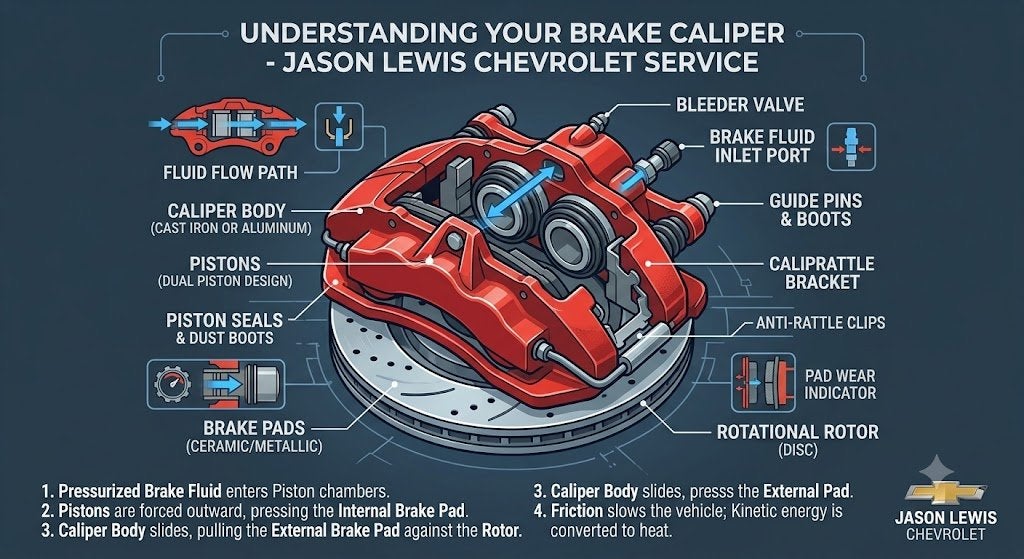
Brake calipers are an important part of your Chevrolet's braking system. They help apply the brake pads against the brake rotors when you press the brake pedal.
When a caliper is working properly, it helps the brake pads make the appropriate contact with the rotor. When a caliper becomes stuck, damaged, leaks, or does not apply pressure correctly, it can affect braking performance and cause additional wear on other brake components.
At Jason Lewis Chevrolet, our service technicians can inspect the brake calipers and the rest of the braking system to help determine the cause of the problem.
What Is a Brake Caliper?
The brake caliper is the component that holds the brake pads and applies pressure to them when you press the brake pedal.
The basic braking process works like this
- You press the brake pedal.
- Hydraulic brake fluid creates pressure throughout the braking system.
- The brake caliper receives hydraulic pressure.
- The caliper presses the brake pads against the brake rotor.
- Friction slows the rotor and safely brings your Chevrolet to a stop.
The brake rotor is the flat metal disc attached to each wheel.
The brake caliper sits over part of the rotor and holds the brake pads in position. When the brakes are applied, the caliper helps press the brake pads against the rotor.
A Simple Way to Think About the Components
The rotating disc.
The friction material that presses against the rotor.
The component that holds and applies pressure to the brake pads. All three work together to help your Chevrolet slow and stop.
When every braking component functions correctly, your Chevrolet delivers smooth, reliable, and predictable stopping performance.
What Does a Brake Caliper Do?
A brake caliper performs several important functions in the braking system.
It helps:
- Hold the brake pads in the proper position
- Apply pressure to the brake pads
- Allow the pads to create friction against the rotor
- Help release the pads when the brake pedal is released
- Contribute to even braking from side to side
If a caliper does not apply or release pressure correctly, the brake pads may not contact the rotor properly.
That can affect braking performance and cause additional wear.
Signs Your Chevrolet May Have a Brake Caliper Problem
A brake caliper problem may produce several different symptoms
You may need to have your braking system inspected if you notice:
Important
These symptoms can have several possible causes
For example, pulling may be related to a brake caliper, but tires, wheel alignment, suspension components, and other issues can also affect how your Chevrolet drives.
A proper inspection is necessary to determine the cause.
What Happens When a Brake Caliper Sticks?
A sticking brake caliper may fail to release the brake pads completely after you release the brake pedal.
When this happens, the brake pad may continue pressing against the rotor while you drive.
A Sticking Brake Caliper May Cause:
In some cases, a sticking caliper can cause the vehicle to pull to one side.
A sticking caliper should not be ignored.
What Happens When a Brake Caliper Does Not Apply Even Pressure?
The brake pads need to contact the rotor properly to help provide consistent braking.
If a caliper does not apply pressure correctly, the brake pads may wear unevenly or the vehicle may not brake evenly from side to side.
Possible symptoms may include:
The cause may involve the caliper itself or another component of the braking system.
An inspection can help determine the source of the problem.
What Causes Brake Caliper Problems?
Brake caliper problems can develop for several reasons, including:
Brake calipers are exposed to repeated movement, heat, moisture, and road conditions. Over time, components within the caliper may wear.
MMoisture, road salt, and other environmental conditions can contribute to corrosion. Corrosion may interfere with the proper movement of caliper components.
Repeated heavy braking can create significant heat.
Excessive heat can contribute to wear or damage to braking components.
A damaged seal may allow brake fluid to leak or allow contamination into areas where it can affect caliper operation.
A caliper problem may sometimes be related to another condition in the braking system.
That is why a complete inspection is important.
What Happens If You Ignore a Brake Caliper Problem?
A brake caliper problem may become more serious if it is ignored.
A caliper that remains partially engaged can create constant friction and heat while you drive. This may lead to additional wear or damage to:
A brake problem can also affect braking performance and may increase stopping distances.
If your Chevrolet pulls, smells like something is burning, or one wheel becomes unusually hot, have the braking system inspected.
Can I Drive With a Bad Brake Caliper?
It depends on the condition and severity of the problem.
If your Chevrolet is pulling significantly, the brakes are overheating, you smell a strong burning odor, you see brake fluid leaking, or braking performance has changed substantially, continued driving may be unsafe.
If you experience a serious change in braking performance, contact the service department before continuing to drive.
A brake caliper problem can create additional heat and damage if the vehicle continues to be driven with a caliper that is not operating correctly.
What Happens During Brake Caliper Service?
The appropriate service depends on the condition of the caliper and the rest of the braking system.
A brake caliper inspection may include:
The technician looks for signs of damage, corrosion, leaks, and other conditions that may affect operation.
Uneven brake pad wear can provide important information about how the caliper is operating.
A caliper problem can cause excessive heat or uneven contact with the rotor.
The hydraulic system relies on brake fluid to apply pressure to the braking components.
The technician evaluates whether the caliper is applying and releasing pressure appropriately.
Depending on the condition, the repair may involve servicing or replacing the caliper or addressing another component contributing to the problem.
The correct repair depends on the condition of the specific Chevrolet and the cause of the problem.
What Are the Benefits of Proper Brake Caliper Service?
A properly functioning brake caliper helps the braking system operate as designed.
Addressing a caliper problem may help:
Because the brake caliper works together with the brake pads and rotors, proper diagnosis is important.
Replacing one component without identifying the underlying problem may not completely resolve the concern.
Why Choose Jason Lewis Chevrolet for Brake Caliper Service?
Your Chevrolet's braking system includes multiple components that must work together properly.
At Jason Lewis Chevrolet, our service technicians can inspect the calipers along with the brake pads, rotors, fluid, and other related components.
Depending on the repair and your Chevrolet, service may include GM Genuine Parts or ACDelco parts appropriate for the repair.
Our goal is to determine what is causing the problem and explain the appropriate repair.
We do not want you to replace parts unnecessarily. We want to help identify what your Chevrolet actually needs.
How Much Does Brake Caliper Service Cost?
The cost of brake caliper service varies depending on your Chevrolet model, the condition of the caliper, the parts required, and whether other brake components also need service.
The best way to determine the cost is to have the braking system inspected and receive an estimate based on the actual condition of your Chevrolet.
Contact Jason Lewis Chevrolet for a Brake Caliper Service Estimate
Frequently Asked Questions About Chevrolet Brake Calipers
What is the difference between a brake caliper and a brake rotor?
The brake rotor is the round metal disc that rotates with the wheel.
The brake caliper sits over part of the rotor and holds the brake pads. When you press the brake pedal, the caliper helps press the brake pads against the rotor to create friction and slow the vehicle.
What does a brake caliper do?
The brake caliper holds the brake pads and applies pressure to them so they can press against the brake rotor.
How do I know if my brake caliper is sticking?
Possible signs include pulling to one side, a burning smell, unusual heat from one wheel, uneven brake pad wear, brake noise, or reduced braking performance.
Can a bad brake caliper damage the rotor?
Yes. A caliper that does not release properly can cause excessive friction and heat. This may contribute to additional wear or damage to the brake rotor.
Why does my Chevrolet pull to one side when braking?
A brake caliper problem can cause a vehicle to pull, particularly if braking force is not balanced from side to side.
However, tires, alignment, suspension components, and other problems can also cause pulling.
Should brake calipers be replaced in pairs?
Not necessarily. The appropriate repair depends on the condition of the calipers and the specific vehicle.
A technician can determine whether one or more calipers require service or replacement.
How long do brake calipers last?
There is no universal mileage interval for replacing brake calipers.
Caliper life depends on the vehicle, driving conditions, corrosion, heat, wear, and other factors.
Can I drive with a sticking brake caliper?
Driving with a sticking caliper may create excessive friction and heat and may cause additional damage.
If your vehicle is pulling, overheating, producing a burning smell, or experiencing a significant change in braking performance, have the vehicle inspected before continuing to drive.
Related Chevrolet Brake Services
A brake caliper problem can affect other parts of the braking system. Jason Lewis Chevrolet can also help with:
Brake Pad Replacement
A sticking or malfunctioning caliper can contribute to uneven or excessive brake pad wear.
Learn More About Chevrolet Brake Pad Replacement
Brake Rotor Service
Excessive heat or uneven brake pad contact can contribute to rotor wear or damage.
Learn More About Chevrolet Brake Rotor Service
Brake Inspection
Not sure what is causing the problem? A brake inspection can help identify wear, damage, or other braking-system concerns.
Learn More About Chevrolet Brake Inspection
Brake Fluid Service
Brake fluid is an important part of the hydraulic braking system and may require service based on its condition.
Learn More About Chevrolet Brake Fluid Service
Brake Repair
Not sure what is wrong with your brakes? Start with a brake inspection and let our technicians help identify the problem.
Learn More About Chevrolet Brake Repair
Schedule Chevrolet Brake Caliper Service in Livingston, TN
If your Chevrolet pulls when braking, produces a burning smell, has uneven brake pad wear, or one wheel becomes unusually hot, the brake caliper may require inspection.
Do not ignore symptoms that may indicate a brake caliper or other braking-system problem.
Jason Lewis Chevrolet can inspect your braking system, help identify the cause of the problem, and explain the appropriate repair.
Schedule Brake Service Online
Call the Jason Lewis Chevrolet Service Department
We proudly serve Chevrolet drivers in Livingston, Cookeville, Crossville, Sparta, and surrounding communities.