





Chevrolet Brake Rotor Service
for Chevy cars, trucks and SUVs
Do you feel a vibration or pulsation when you press the brake pedal? Are your brakes making unusual noises? Does your Chevrolet seem to shake when slowing down? The brake rotors may be part of the problem. Our factory-trained technicians inspect, diagnose, and service your Chevrolet's brake rotors to restore smooth, confident braking.
Round Metal Discs That Make Braking Possible
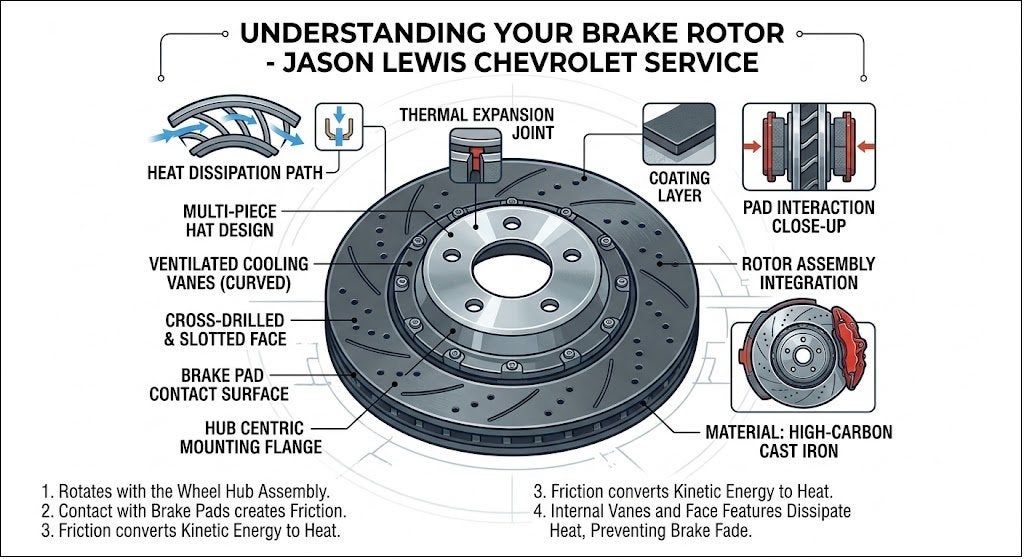
Brake rotors are round metal discs connected to your vehicle's wheels. When you press the brake pedal, the brake pads clamp against the rotating brake rotors. The friction between the pads and rotors slows the rotation of the wheels and helps bring your Chevrolet to a stop.
Because brake rotors are exposed to repeated friction and heat, they can wear or become damaged over time. The condition of the rotors can also be affected by normal brake pad wear, repeated heavy braking, stop-and-go driving, towing or carrying heavy loads, excessive heat, corrosion, uneven wear, and brake components that are not operating properly.
Schedule Chevrolet Brake Rotor ServiceWhen you press the brake pedal, friction between the pads and rotors slows your vehicle to a stop.
Signs your Chevrolet May Need Brake Rotor Service
Brake rotor problems can produce several different symptoms. You may need to have your brake rotors inspected if you notice any of the following warning signs.
What Symptoms Indicate Brake Rotor Problems on Your Chevy Vehicle?
These symptoms can have more than one possible cause. For example, vibration during braking may be related to brake rotor thickness variation, rotor damage, brake pad problems, calipers, tires, suspension components, or other issues. That is why a proper inspection is important before replacing parts.
-
Vibration when braking
-
Pulsation in the brake pedal
-
Shaking through the steering wheel when slowing down
-
Uneven or inconsistent braking
-
Scraping or grinding noises
-
Deep grooves or visible scoring on the rotor surface
-
Blue or discolored areas on the rotor
-
A brake pedal that feels different than usual
-
Longer stopping distances
-
Excessive rust or corrosion on the braking surface
What Happens if you Ignore a Brake Rotor Problem on your Chevrolet?
A brake rotor problem may become worse if ignored. Depending on the cause and severity, continued driving may contribute to increasing vibration, uneven brake pad wear, additional damage to the braking system, reduced braking performance, longer stopping distances, and more expensive repairs. A rotor problem may also be a symptom of another issue — that's why our technicians inspect the complete braking system rather than looking at the rotor in isolation.
Why Do Brake Rotors Wear or Become Damaged?
Brake rotors are designed to withstand repeated braking, but they do not last forever. Several factors can contribute to rotor wear or damage.
Normal Wear
Every time brake pads press against rotors, material gradually wears away. Over time, rotors may become too thin or develop other conditions requiring service.
Excessive Heat
Repeated heavy braking generates significant heat, which can occur during stop-and-go driving, hilly areas, or towing. This contributes to changes in rotor condition.
Worn Brake Pads
Severely worn pads can cause metal components to eventually contact the rotor and cause significant damage that requires replacement.
Uneven Wear
A rotor may wear unevenly because of brake-system problems or conditions affecting how brake pads contact the rotor.
Corrosion and Rust
Moisture, weather, and periods of inactivity contribute to corrosion. Excessive damage may affect braking performance.
Why is my Chevrolet Shaking When I Brake?
A common reason customers seek brake rotor service is vibration or shaking when braking. You may feel the vibration through the brake pedal, through the steering wheel, or throughout the vehicle.
Brake vibration can be related to brake rotor thickness variation, rotor damage, or uneven contact between brake pads and rotors. However, not every vibration during braking is caused by the rotors. Tires, wheels, suspension components, brake calipers, and other parts can sometimes create similar symptoms.
A proper inspection can help determine the actual source of the vibration.
Vibration can have multiple causes — proper diagnosis is essential before recommending repairs.
What does brake rotor service involve?
The appropriate service depends on the condition of the rotors and the requirements of your specific Chevrolet. Our inspection may include measuring rotor thickness, checking specifications, inspecting pads and related components, and determining whether resurfacing or replacement is needed.
Inspect rotors
We check for wear, damage, scoring, corrosion, and other conditions affecting performance.
Measure Condition
Rotor thickness and wear patterns are measured to determine whether specifications are met.
Check Brake Pads
Brake pads are inspected for wear and uneven contact with rotors.
Evaluate Components
Related brake components, including calipers and other braking system parts, are checked.
Verify Performance
After service, the braking system is checked to confirm proper operation and smooth braking.
Do Brake Rotors Always Need to be Replaced?
No. The correct repair depends on the condition of the rotor. In some circumstances, a rotor may remain serviceable. In other cases, the rotor may be too thin, damaged, excessively scored, corroded, or otherwise outside the required specifications.
When a rotor cannot safely or properly continue in service, replacement may be necessary. Our technicians can inspect the braking system and explain what they find, providing recommendations based on the actual condition of your vehicle.
Not every brake rotor problem requires the same repair — the appropriate recommendation depends on your specific situation.
We determine what your Chevrolet actually needs, not just what might be easy to replace.
What Chevrolet Brake Rotor Service Can Help With
- Reduce unwanted brake vibration and shaking
- Improve braking consistency and response
- Help prevent additional damage to the braking system
- Promote even contact between brake pads and rotors
- Help maintain proper braking performance
- Provide greater confidence when stopping
Expert Chevrolet Knowledge
Our service technicians work with Chevrolet vehicles and understand the braking systems in detail. We use GM Genuine Parts or ACDelco parts appropriate for your repair.
Complete Brake System Inspection
We inspect the complete braking system to help identify the cause of the problem, not just the symptom you're experiencing.
Clear recommendations
We explain exactly what we find, why service is needed, and what the appropriate repair will cost — with no jargon and no surprises.
How Much Does Brake Rotor Service Cost?
The cost of brake rotor service varies depending on your Chevrolet model, the condition of the rotors, the parts required, and whether other brake components also require service. The best way to determine the actual cost is to have the braking system inspected and receive an estimate based on your vehicle's specific condition. Contact Jason Lewis Chevrolet for a complete brake rotor service estimate.
Frequently asked questions
There is no single mileage interval that applies to every Chevrolet or every driver. Rotor life depends on driving habits, traffic, vehicle weight, towing, braking conditions, brake pad wear, corrosion, and other factors. A brake inspection can help determine the condition of your rotors.
A shaking steering wheel during braking may be related to brake rotor thickness variation or another braking-system problem. Tires, wheels, suspension components, and other parts can also cause similar symptoms. An inspection can help identify the actual cause.
A pulsating brake pedal may be related to variation in the brake rotor surface or other conditions affecting the braking system. The cause should be properly diagnosed before determining the appropriate repair.
It depends on the condition of the braking system and the severity of the problem. If you experience severe vibration, grinding, a significant change in braking performance, or another serious brake concern, continued driving may be unsafe. Have the vehicle inspected as soon as possible.
In some situations, a rotor may be eligible for resurfacing if it meets the applicable specifications and is otherwise in acceptable condition. In other situations, replacement may be necessary. The appropriate service depends on the condition of the rotor and your specific Chevrolet vehicle.
Not always. The rotors should be inspected to determine whether they are in acceptable condition. If the rotors are worn or damaged beyond the required specifications, replacement may be necessary when new brake pads are installed.
Noise may be caused by worn brake pads, rotor damage, corrosion, debris, caliper problems, or other brake-system conditions. An inspection can help determine the source of the noise.
Comprehensive brake system care
Schedule Chevrolet Brake Rotor Service Today
If your Chevrolet shakes, vibrates, pulsates, or makes unusual noises when braking, don't ignore the problem. Brake rotor symptoms can have several possible causes. The best first step is to have the braking system inspected so the actual problem can be identified.
We proudly serve Chevrolet drivers in Livingston, Cookeville, Crossville, Sparta, Jamestown, Fairfield Glade, Monterey, and surrounding communities.