




Steering & Wheel-Connecting Components Service
Does Your Vehicle Feel Different When You Turn?
Your vehicle’s steering system allows you to control the direction of travel. A series of interconnected steering and suspension components transfers movement from the steering wheel to the wheels, enabling them to turn while also moving with the suspension as it responds to road conditions.
These components work together every time you:
- Turn the steering wheel
- Change lanes
- Drive over a bump
- Turn a corner
- Brake
- Accelerate
- Drive over uneven pavement
When one of these components becomes worn, damaged, or bent, you may notice changes in steering, handling, tire wear, or the way your vehicle responds.
Is your steering or handling different?
How Do the Steering and Wheel-Connecting Components Work Together?
Think of the system as a chain.
You turn the steering wheel
Steering components transfer your input
Wheel-connected components move the wheel assembly
The tires change direction
Your vehicle turns
At the same time, the suspension must allow the wheels to move up and down as the vehicle travels over the road.
The components must allow movement while remaining strong enough to control the wheel assembly.
That is why the condition of these components matters.
The Five Major Component Groups
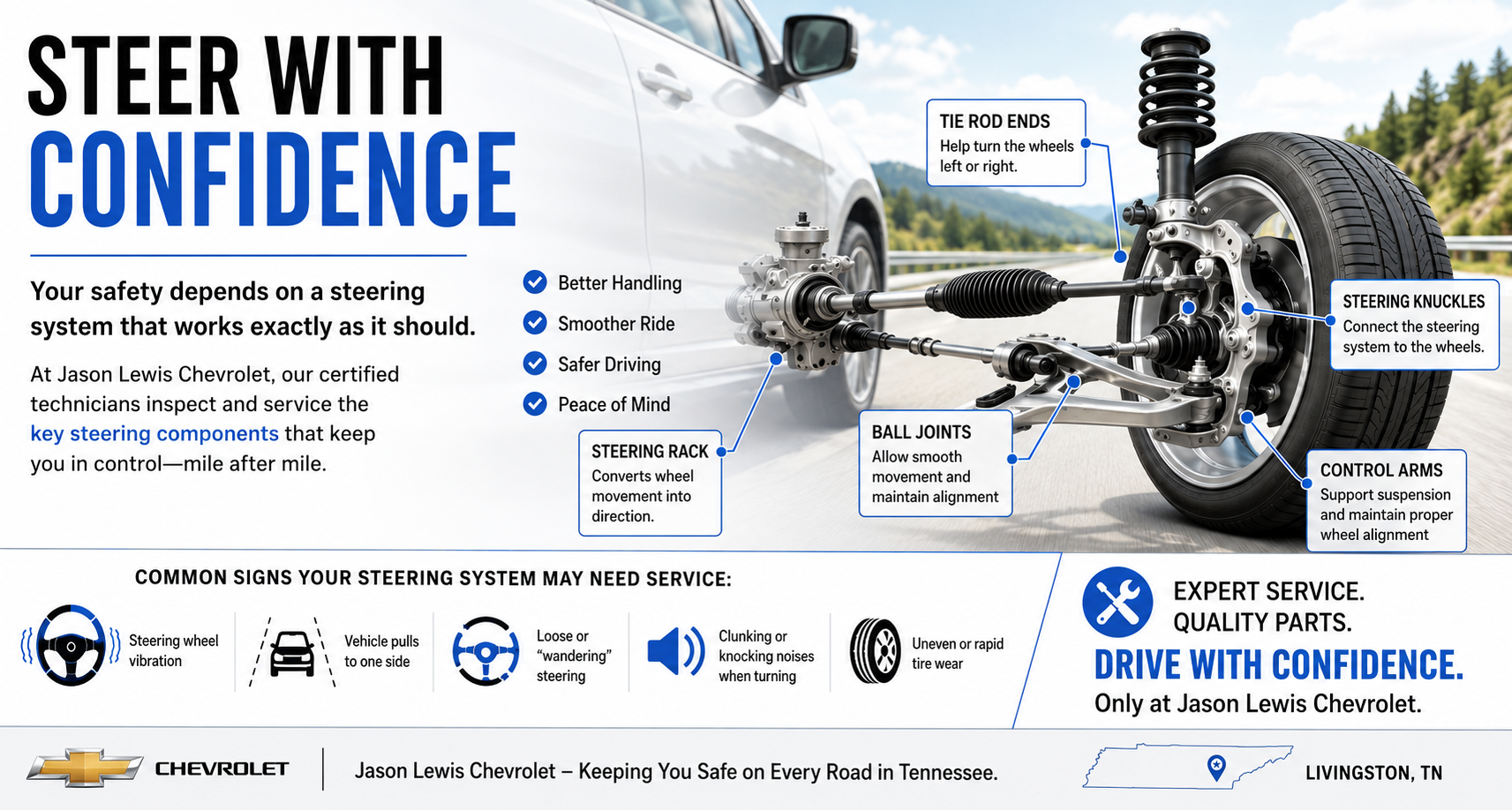
The steering and wheel-connected system includes many components. Five important groups include:
- Control arms
- Ball joints
- Tie rods
- Steering knuckles
- Bushings
These components have different jobs, but they work together to help connect the vehicle to the wheels and control movement.
Control Arms - Connecting the Wheel Assembly to the Vehicle
Control arms, sometimes called wishbones or A-arms, connect portions of the suspension to the vehicle's frame or subframe.
They help allow the wheel assembly to move up and down as the suspension responds to the road while helping control the position of the wheel.
A control arm may contain or connect to components such as:
- Bushings
- Ball joints
- Other suspension connections
The design varies by vehicle.
What Can Happen When a Control Arm Has a Problem?
A worn or damaged control arm or its related components may contribute to:
- Clunking or knocking sounds
- Changes in handling
- Uneven tire wear
- Steering changes
- Alignment problems
- Excessive movement in the wheel assembly
A control arm can also be damaged by a significant impact, such as a collision or severe pothole. A damaged control arm may affect more than one aspect of how the vehicle drives.
Ball Joints - Allowing Controlled Movement
Ball joints connect components of the suspension while allowing controlled movement.
They function somewhat like a joint, allowing movement in multiple directions while helping maintain the connection between the suspension and wheel assembly.
Ball joints are important because the wheels must be able to:
- Move up and down with the suspension
- Turn when the driver steers
- Maintain their connection to the vehicle
Possible Signs of a Ball Joint Problem
Symptoms can vary depending on the vehicle and the condition of the component.
Possible signs include:
- Clunking or knocking
- Steering changes
- Vehicle wandering
- Uneven tire wear
- Excessive movement
- Changes in handling
A severely worn or damaged ball joint can become a serious safety concern. Do not ignore unusual steering or suspension noises.
Tie Rods - Transferring Steering Movement to the Wheels
Tie rods are important steering components that help transfer steering movement toward the wheels.
When you turn the steering wheel, the steering system must transfer that movement through a series of components so the wheels turn in the intended direction.
Tie rods are part of that connection.
Possible Signs of a Tie Rod Problem
A worn or damaged tie rod may contribute to:
- Loose or imprecise steering
- Excessive play in the steering wheel
- Clunking or knocking
- Vehicle wandering
- Uneven tire wear
- Changes in steering response
Because tie rods help control the direction of the wheels, their condition is important to proper steering.
Steering Knuckles - Connecting Steering and Suspension Components
The steering knuckle, sometimes called a spindle on certain vehicle designs, is a major component that connects portions of the steering and suspension systems to the wheel assembly.
The exact design varies by vehicle.
The steering knuckle may connect with or support components such as:
- Control arms
- Ball joints
- Tie rods
- Wheel hubs
- Bearings
- Other steering and suspension components
It allows the wheel assembly to pivot as the vehicle turns while remaining connected to the suspension system.
How Can a Steering Knuckle Be Damaged?
A significant impact, collision, or other event may bend or damage a steering knuckle.
A damaged knuckle can affect:
- Steering
- Wheel position
- Alignment
- Tire wear
- Handling
Because the steering knuckle is connected to multiple systems, proper diagnosis is important.
Bushings - Helping Control Movement and Reduce Vibration
Bushings are flexible components that help connect various steering and suspension components.
They allow controlled movement while helping isolate vibration, noise, and harshness.
Bushings can be made from different materials depending on the vehicle and application.
Over time, bushings can wear, crack, deteriorate, or become damaged.
Possible Signs of Worn Bushings
Worn bushings may contribute to:
- Clunking or squeaking
- Changes in handling
- Excessive movement
- Steering changes
- Uneven tire wear
- Increased vibration
Because bushings are used in many locations, the symptoms can vary depending on which bushing is affected.
What Can Damage Steering and Wheel-Connecting Components?
These components are designed to withstand normal driving conditions. However, certain conditions can accelerate wear or cause damage.
Potholes
A severe pothole can create a significant impact that affects:
- Control arms
- Ball joints
- Tie rods
- Steering knuckles
- Wheels
- Tires
- Alignment
Curbs
Hitting a curb can damage or bend components even when the damage is not immediately visible.
Collisions
A collision can affect steering and suspension components even when the visible exterior damage appears limited.
Rough Roads
Repeated driving over rough roads can place additional stress on steering and suspension components.
Normal Wear
Components can gradually wear as the vehicle accumulates mileage.
Corrosion and Environmental Conditions
Depending on where and how a vehicle is driven, corrosion can affect certain components and connections.
Signs You May Need a Steering Inspection
Do not ignore changes in how your vehicle steers or handles.
You may want to have the steering and wheel-connected components inspected if you notice:
Clunking or Knocking
A noise when turning, braking, accelerating, or driving over bumps may indicate a component requires inspection.
Excessive Steering Play
If the steering wheel moves noticeably before the vehicle responds, the steering system should be evaluated.
Vehicle Wandering
If the vehicle does not track normally or requires frequent steering corrections, several possible causes should be considered.
Pulling to One Side
Pulling can be related to tires, tire pressure, alignment, steering, suspension, road conditions, or other factors.
Uneven Tire Wear
Uneven wear can result from alignment problems, tire pressure, steering components, suspension components, or other conditions.
Steering Wheel Vibration
Vibration may be related to tire balance, tire damage, wheel damage, alignment, steering, suspension, or other conditions.
Changes After Hitting a Pothole or Curb
If your vehicle feels different after a significant impact, an inspection may be appropriate.
The Same Symptom Can Have Many Causes
This is one of the most important things for a vehicle owner to understand.
A Clunk Does Not Automatically Mean a Ball Joint Is Bad
The noise could involve a bushing, control arm, tie rod, stabilizer link, mount, or another component.
A Pulling Vehicle Does Not Automatically Mean It Needs an Alignment
The cause could involve tire pressure, tires, road conditions, alignment, steering, or suspension.
A Steering Vibration Does Not Automatically Mean the Tires Need Balancing
The cause could involve tires, wheels, alignment, steering components, suspension components, or other conditions.
Uneven Tire Wear Does Not Automatically Mean the Tires Are Defective
The cause may involve alignment, tire pressure, steering, suspension, balance, or other factors.
The symptom tells you something may be wrong. It does not always tell you which part is causing the problem.
That is why proper diagnosis matters.
Why Proper Diagnosis Is Important
A modern vehicle contains many interconnected systems.
A professional inspection may involve evaluating:
- Steering components
- Suspension components
- Tires
- Wheels
- Wheel alignment
- Wheel bearings
- Related connections
- Other components affecting steering and handling
The goal is to identify the cause of the problem rather than simply replace a part based on a guess. The right repair begins with the right diagnosis.
Steering and Suspension Problems Can Affect Your Tires
Your tires are a significant investment.
A worn or damaged steering or wheel-connected component can affect the position or movement of the wheel assembly.
That may contribute to:
Component wear or damage
Changes in wheel position or movement
Alignment or tire-contact problems
Uneven tire wear
Shortened tire life
That is why unusual tire wear should not always be treated as a tire problem alone.
Sometimes the tire is showing evidence of a problem somewhere else in the vehicle.
How to Help Protect Your Steering System
You cannot prevent every pothole or road impact. However, you can help identify problems earlier.
Pay Attention to Changes
If your vehicle suddenly steers or handles differently, do not ignore the change.
Inspect Your Tires
Uneven tire wear may be an early indication of a steering, suspension, alignment, or tire-related problem.
Avoid Severe Impacts When Possible
Potholes and curbs can create significant forces that affect steering and suspension components.
Maintain Proper Tire Inflation
Incorrect tire pressure can affect handling and contribute to tire wear.
Have Significant Impacts Inspected
If you hit a severe pothole or curb and the vehicle feels different afterward, an inspection may help identify damage.
Follow Recommended Maintenance
Regular maintenance and inspections can help identify worn components before they create additional problems.
Steering & Wheel-Connecting Service for Chevrolet, GM, and Other Vehicles
Jason Lewis Chevrolet provides steering and suspension-related service for Chevrolet vehicles as well as other GM brands, including:
- Cadillac
- GMC
- Buick
Our service department also serves many other domestic and foreign vehicle makes and models.
Whether you drive a Chevrolet Silverado, GMC Sierra, Ford F-150, Toyota Camry, Honda CR-V, Nissan Rogue, or another vehicle, contact Jason Lewis Chevrolet if you are experiencing steering, handling, noise, or tire-wear concerns.
Is Your Vehicle Steering or Handling Differently?
Your vehicle's steering and wheel-connected components work together every time you turn the steering wheel, drive over a bump, or travel over uneven pavement.
If you notice clunking, wandering, excessive steering play, pulling, vibration, or unusual tire wear, the cause should be properly evaluated.
Steering & Wheel-Connecting Components Frequently Asked Questions
What are steering and wheel-connected components?
These are components that help connect the steering system, suspension system, and wheel assembly. They include control arms, ball joints, tie rods, steering knuckles, bushings, and other related components.
What does a control arm do?
A control arm helps connect part of the suspension to the vehicle and allows controlled movement as the suspension responds to the road.
What does a ball joint do?
A ball joint allows controlled movement between connected suspension components while helping maintain the connection between the vehicle and wheel assembly.
What does a tie rod do?
A tie rod helps transfer steering movement toward the wheels and helps control the direction in which the wheels point.
What is a steering knuckle?
A steering knuckle is a major component that connects portions of the steering and suspension systems to the wheel assembly and allows the wheel assembly to pivot when the vehicle turns.
What do bushings do?
Bushings help connect components, allow controlled movement, and help isolate vibration, noise, and harshness.
What are signs of a steering or suspension problem?
Possible signs include clunking, knocking, excessive steering play, wandering, pulling, vibration, uneven tire wear, or changes in handling.
Can a pothole damage steering components?
Yes. A significant pothole impact can damage or accelerate wear on steering, suspension, wheel, tire, and alignment-related components.
Can steering problems cause uneven tire wear?
Yes. A problem with steering or related components can contribute to changes in wheel position or movement, which may contribute to uneven tire wear.
Is a steering problem the same as a wheel alignment problem?
No. Steering components and alignment are related but different. A steering or suspension problem can contribute to alignment changes, but a proper inspection is needed to determine the cause.
Can Jason Lewis Chevrolet service steering components on non-Chevrolet vehicles?
Yes. Jason Lewis Chevrolet serves Chevrolet, Cadillac, GMC, Buick, and many other domestic and foreign vehicle makes and models.
Does Your Vehicle Feel Different?
If your vehicle is pulling, wandering, vibrating, making unusual noises, or wearing tires unevenly, do not ignore the change.
The cause could involve a tire, wheel, alignment, steering component, suspension component, or another condition. A proper diagnosis can help determine what your vehicle actually needs.
Is Your Vehicle Steering Properly?
If steering your vehicle does not feel right, it could be one of the many components needing replacement. Let our master mechanics diagnose the problem
We proudly serve Chevrolet drivers in Livingston, Cookeville, Crossville, Monterey, Sparta, Jamestown, Fairfield Glade, and surrounding East Tennessee communities.