





Chevrolet Brake Repair Service
in Livingston, TN
Not Sure What's Wrong With Your Chevy Brakes?
Start Here.
Hearing a noise, feeling a vibration, or noticing that your brake pedal does not feel right? You do not need to diagnose the problem yourself.
That is what a proper brake inspection is for.
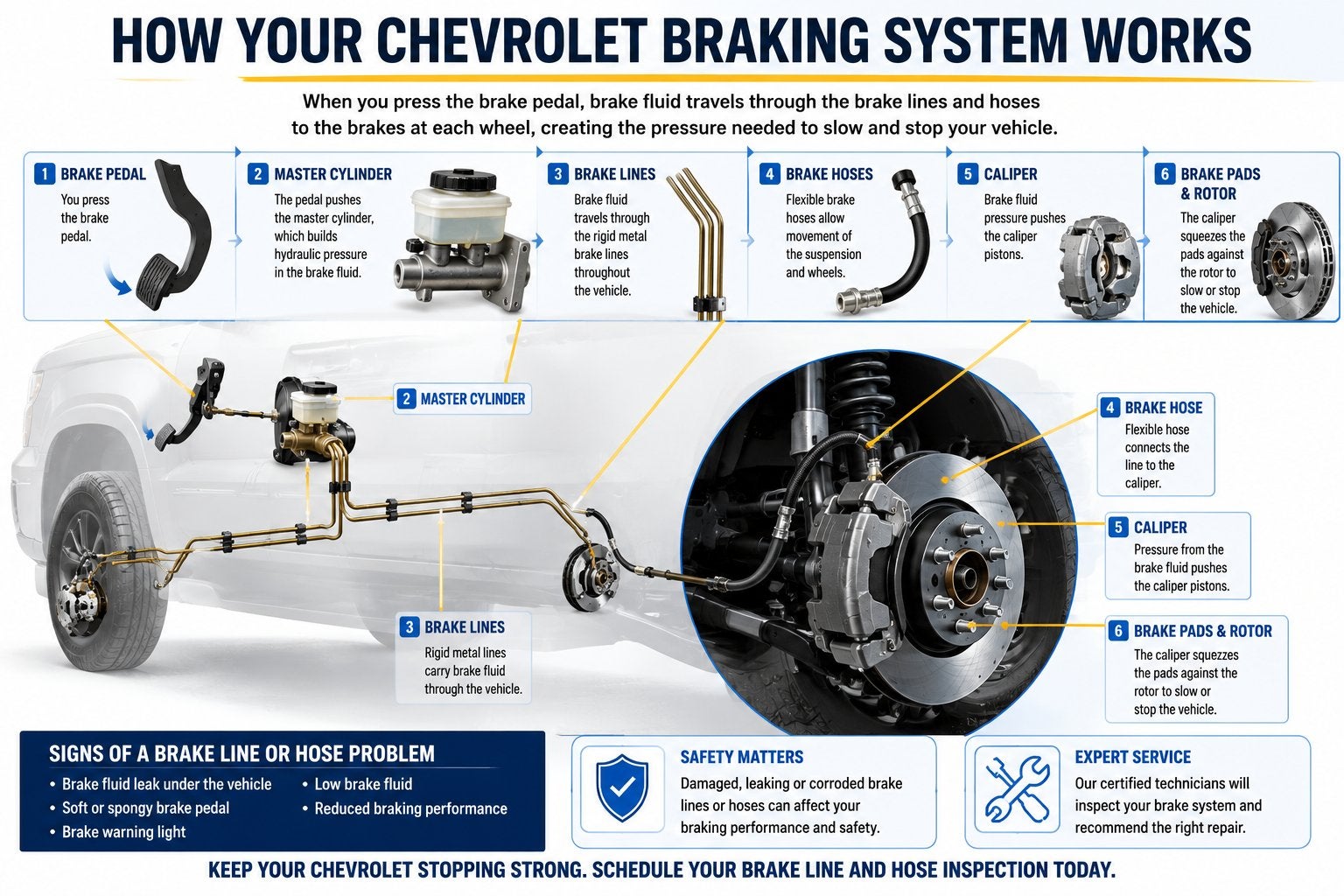
Brake repair can involve many different parts of your Chevrolet's braking system. The problem may involve the brake pads, rotors, calipers, brake fluid, brake lines, or electronic components such as ABS sensors.
At Jason Lewis Chevrolet, our technicians can inspect your braking system, help identify the source of the problem, explain what we find, and recommend the appropriate repair.
If something feels different when you apply the brakes, schedule a brake inspection today!
Common Chevrolet Brake Problems We Diagnose and Repair
Brake problems can originate in several different parts of the braking system. The same symptom can sometimes have more than one possible cause.
Some of the components we may inspect include:
- Brake pads
- Brake rotors
- Brake calipers
- Brake fluid
- Brake lines and hoses
- ABS sensors and other electronic components
- Other parts of the braking system
The first step is determining what is actually causing the problem.
Common Signs Your Chevrolet May Need Brake Repair
| What You Notice | Possible Cause |
|---|---|
| Squealing or squeaking when braking | Worn brake pads or other brake-system conditions |
| Grinding noise | Severely worn brake pads or another component making metal-to-metal contact |
| Vibration or pulsing when braking | Brake rotor thickness variation, rotor damage, or another braking-system issue |
| Chevrolet pulls to one side when braking | A brake caliper problem, uneven brake wear, or another issue affecting braking |
| Soft, spongy, or sinking brake pedal | Air or moisture in the brake system, a fluid problem, or another braking-system concern |
| Brake warning light appears | Low brake fluid, a system fault, or another condition requiring attention |
| Burning smell after driving | Overheated brakes or a brake component that may not be releasing properly |
| Brake fluid leak or puddle under the vehicle | A possible damaged brake line, hose, seal, or other component |
These symptoms do not always identify the exact problem by themselves. For example, a vibration when braking may be related to the rotors, but other components can also cause similar symptoms.
That is why proper diagnosis matters.
Can I Still Drive My Chevrolet?
Some brake problems require immediate attention.
If you experience a significant loss of braking power, a brake pedal that goes to the floor, a major brake fluid leak, severe grinding, or another serious change in braking performance, continuing to drive may be unsafe.
If your Chevrolet is difficult to stop or the brakes do not feel normal, contact the service department before continuing to drive the vehicle.
When in doubt, it is better to have the braking system inspected than to ignore a problem that could affect your ability to stop safely.
Why a Proper Brake Diagnosis Matters
Two different brake problems can sometimes feel almost identical to the driver.
For example, a grinding noise may be caused by severely worn brake pads. However, another problem involving a caliper or another brake component could also contribute to abnormal noise and potentially cause additional damage.
Guessing at the problem can lead to replacing the wrong part or missing the actual cause of the concern.
Our technicians can perform a comprehensive inspection of the braking system, including the brake pads, rotors, calipers, brake lines, fluid, and related components, to help identify the source of the problem before recommending repairs.
The goal is to determine what your Chevrolet actually needs.
What Happens If You Wait?
Brake problems generally do not repair themselves.
Delaying an inspection or repair may allow a relatively small problem to become more serious. Depending on the cause of the problem, delaying service may result in:
- Additional wear or damage to other brake components
- Reduced braking performance
- Longer stopping distances
- More expensive repairs
- Increased risk to you, your passengers, and others on the road
For example, worn brake pads may eventually damage the brake rotors if the problem is ignored for too long.
If you notice a change in the way your Chevrolet sounds, feels, or stops, having the braking system inspected may help identify the problem before additional damage occurs.
What Does the Brake Repair Process Look Like?
When you bring your Chevrolet to Jason Lewis Chevrolet with a brake concern, the process generally begins with identifying the problem.
1. Inspection
Our technicians inspect the braking system and look for signs of wear, damage, leaks, or other problems.
Depending on the symptoms, the inspection may include the brake pads, rotors, calipers, brake lines, brake fluid, and related components.
2. Diagnosis
We work to identify the likely cause of the problem rather than simply replacing parts based on a symptom.
3. Recommendation
We explain what we found, what repairs may be needed, and why the repair is recommended. We can also provide an estimate before authorized work begins.
4. Repair
Once you authorize the work, our technicians perform the needed service using GM OEM parts appropriate for your Chevrolet.
5. Verification
After the repair, the braking system is checked to help verify proper operation within manufacturer specification before your Chevy vehicle is returned to you.
Not Sure Which Chevy Brake Service You Need?
That is okay.
You do not have to determine whether the problem is your brake pads, rotors, calipers, fluid, or another component before contacting us.
If you know something is wrong but are not sure what service you need, start with a brake inspection.
Depending on what the inspection finds, your Chevrolet may need one or more of the following services:
Brake Inspection
A comprehensive examination of the braking system will identify wear, damage, or other problems.
Learn More About Chevrolet Brake Inspection Findings
Brake Pad Replacement
Replacement of worn brake pads when the remaining friction material is no longer adequate or the pads are otherwise damaged.
Learn More About Chevrolet Brake Pad Replacement
Brake Fluid Service
Service related to brake fluid condition, contamination, moisture, or other concerns affecting the hydraulic braking system.
Learn More About Chevrolet Brake Fluid Service
Brake Line and Hose Services
Service related to brake line and hoses that spring leaks or become damaged.
Learn More About Chevrolet Brake Line and Hose Services
Brake Rotor Service
Inspection and service of brake rotors for wear, damage, thickness variation, or other rotor-related problems affect braking performance.
Learn More About Chevrolet Brake Rotor Service
Chevrolet Brake Caliper
Service related to a damaged or broken brake caliper that affects the braking system.
Why Choose Jason Lewis Chevrolet for Brake Repair?
Your Chevrolet's braking system is an important safety system. When something does not feel right, you want the problem properly identified and the appropriate repair performed.
Jason Lewis Chevrolet's service technicians work with Chevrolet vehicles and understand the systems and components used in your vehicle.
Depending on the repair and your vehicle, service may include GM Genuine Parts or ACDelco parts that are appropriate for the repair.
Our goal is to:
- Properly inspect the concern
- Identify the likely cause
- Explain what we find in plain language
- Recommend the appropriate repair
- Provide an estimate before authorized work begins
- Help return your Chevrolet to proper operating condition
You do not need to guess which part is causing the problem. Let our service team help determine what your Chevrolet needs.
How Much Does Brake Repair Cost?
The cost of brake repair varies depending on the cause of the problem, your Chevrolet model, the parts required, and the condition of the braking system.
A squealing noise may require a different repair than a soft brake pedal, brake fluid leak, or vibration when braking.
The best way to determine the cost is to have the braking system inspected and receive an estimate based on the actual condition of your Chevrolet.
Frequently Asked Questions About Chevrolet Brake Repair
What should I do if I do not know what is wrong with my brakes?
Start with a brake inspection. You do not need to know whether the problem involves the brake pads, rotors, calipers, fluid, or another component before bringing your Chevrolet in for evaluation.
What are the most common signs of a brake problem?
Common warning signs include unusual noises, grinding, vibration when braking, pulling to one side, a soft or spongy brake pedal, longer stopping distances, warning lights, burning smells, and visible brake fluid leaks.
Why are my brakes making a grinding noise?
Grinding may indicate severely worn brake pads or another brake component making metal-to-metal contact. Because continued driving may cause additional damage, the braking system should be inspected as soon as possible.
Why does my Chevrolet shake when I brake?
A vibration or pulsation during braking may be related to brake rotor thickness variation, rotor damage, or another issue affecting the braking system. An inspection can help determine the cause.
Why does my Chevrolet pull to one side when I brake?
Pulling may be related to a brake caliper problem, uneven brake wear, or another condition affecting the braking system. Tires, suspension, and alignment can also affect how a vehicle tracks, so proper diagnosis is important.
What does a soft or spongy brake pedal mean?
A soft or spongy pedal can be associated with air or moisture in the brake system, a brake fluid concern, or another problem affecting the hydraulic braking system. The vehicle should be inspected.
Can I drive my Chevrolet if the brake warning light is on?
The answer depends on which warning light is illuminated and the condition of the vehicle. A brake warning light should not be ignored. If braking performance has changed, the pedal feels abnormal, or you have a significant fluid leak, continued driving may be unsafe.
Do I need to know which brake part is failing before I schedule service?
No. If you know something is wrong but do not know the cause, schedule a brake inspection. The purpose of the inspection is to help identify the source of the problem.
Schedule Chevrolet Brake Repair in Livingston, TN
If something feels different when you brake, do not wait for the problem to become worse.
Whether you hear an unusual noise, feel vibration, notice a warning light, or simply believe your brakes are not working as they should, the first step is to have the braking system inspected.
Jason Lewis Chevrolet can help determine what is causing the problem and what service your Chevrolet needs.
We proudly serve Chevrolet drivers in Livingston, Cookeville, Crossville, Sparta, and surrounding communities.